Wind Mitigation Requirements Before Listing Your St George Island Beach House in 2026
November 11, 2026 by Melissa Chandler
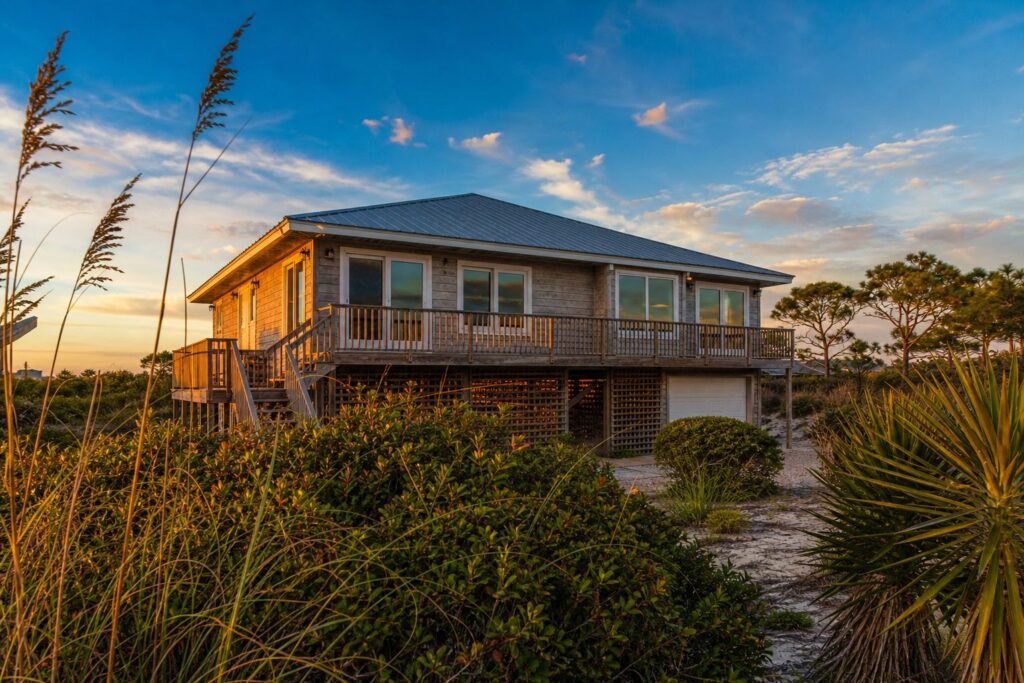
What are the wind mitigation and hurricane hardening requirements I need to meet before listing my St George Island beach house in 2026 to satisfy buyers and their insurers?
You need a completed wind mitigation inspection on the revised OIR-B1-1802 form (mandatory since April 1, 2026), with photographic documentation of all nine scored features, and every opening in your home must be protected and in good condition, or you lose every credit on the form.
Why This Matters Right Now on St George Island
I grew up on this island. My family moved here in 1968, and my father was a realtor on this coast, so I’ve watched the real estate landscape shift with every hurricane season and every insurance reform. What I can tell you right now is that the insurance conversation has become the single biggest factor in whether a St George Island beach house sells or sits.
The average Florida homeowner premium now runs over $15,000 a year, roughly triple the national average, according to recent state insurance mitigation data. Buyers shopping for St George Island homes for sale are doing the insurance math before they even schedule a showing. With properties averaging 134 days on market as of mid-2026, up from 122 days last year per coastal market reports, you cannot afford to hand a buyer a reason to walk away, and a missing or outdated wind mitigation report is exactly that kind of reason.
Florida updated its wind mitigation form for the first time in over a decade. If you are listing in 2026, you need to understand the new rules.
The New 2026 Wind Mitigation Form and What Changed for St George Island Sellers
The Florida Office of Insurance Regulation revised the OIR-B1-1802 wind mitigation form, which was approved by the Florida Cabinet in September 2025 and became mandatory on April 1, 2026. This matters because any new inspection performed after that date must use the revised form. The old form, which had been in use since 2012, no longer counts for new inspections.
Here is what changed: the old form scored seven features. The new form scores nine. Two new categories were added.
- Region (Design Wind Speed): This records your home’s wind speed region under ASCE 7-22. St George Island falls along the Gulf coast where design wind speeds are significant, and the higher the design wind speed, the more weight every other mitigation feature carries.
- Roof Slope: Now classified as at or above 6:12 versus under 6:12.
Having closed over 300 transactions in this market over my 13 years in real estate, I can tell you that the shift from seven to nine scored features is not just paperwork. It changes how buyers’ insurance agents calculate premiums, and it changes which upgrades actually move the needle on your sale price.
The form is generally valid for up to five years if no material structural changes have been made. So if you had an inspection done under the old form before April 1, 2026, it may still be valid for your current policy, but a buyer’s insurer will almost certainly want the new form.
The Nine Features Inspectors Score on Your St George Island Home
You need to understand exactly what the inspector evaluates, because each feature directly affects the insurance discount your buyer can claim. Here they are:
- Building Code / Construction Era: Homes permitted under the 2001 Florida Building Code or later are generally treated as structurally stronger from the start. Many of the older cottages along Franklin Boulevard and the Town Center corridor were built well before 2001, which means they start at a disadvantage.
- Region (Design Wind Speed): NEW. Records whether your home sits in HVHZ, Region 1 (140+ mph), Region 2 (130-139 mph), or Region 3 (under 130 mph).
- Roof Covering: Shingle type, age, and Florida product approval matter here.
- Roof Slope: NEW. At or above 6:12 versus under 6:12.
- Roof Deck Attachment: How the plywood or OSB sheathing is fastened to the trusses. The form grades the weakest attachment found. The 2026 form adds a pathway for closed-cell spray foam rated at 110 PSF uplift resistance applied under the deck.
- Roof-to-Wall Connection: Toe nails versus clips versus hurricane straps. The 2026 form tightened definitions with specific uplift-capacity thresholds.
- Roof Geometry: Hip roofs, which slope down on all four sides, shed wind better than gable roofs and score higher.
- Secondary Water Resistance (Sealed Roof Deck): A sealed roof deck keeps water out if the covering blows off. Qualifying methods include a fully adhered polymer-modified bitumen underlayment, self-adhering tape over deck seams, or full spray-foam coverage of the deck underside. Standard underlayment and hot-mopped felt do not qualify.
- Opening Protection: Every window, door, skylight, and garage door must be impact-rated or protected by approved shutters.
What does this actually mean when you are sitting across from a buyer at closing? It means their lender and their insurer are both looking at this form, and the credits it generates can save thousands of dollars annually on premiums. In a market where the median sale price hit $1,200,000 in July 2026 according to local market data, buyers are scrutinizing every line.
The Opening Protection Trap That Kills St George Island Deals
This is the part I wish every seller on St George Island understood before they called me. Opening protection is all-or-nothing. One unprotected or damaged opening removes the credit for every opening on your home.
The 2026 form added a damaged-opening level, marked Z, which states it directly: every opening has to be in good condition, and a home with any opening that needs repair or replacement does not qualify for wind mitigation rate differentials at all, no matter what other features it has. A single rotted or broken window can cost you not just the opening protection credit but every credit on the form.
That is not a typo. One bad window can wipe out every discount.
Qualifying protection methods include:
- Impact windows (laminated glass)
- Impact doors (sliding, entry, French)
- Impact garage doors
- Accordion or roll-down shutters
- Bahama and colonial shutters
- Aluminum or polycarbonate storm panels
- Hurricane fabric screens
What does not qualify? Loose plywood nailed up before a storm. And here is another mistake I see: homeowners who replace several windows and assume that establishes the protection classification for the entire home. It does not. Every single opening must be covered.
If your beach house sits along West Gulf Beach Drive or anywhere on the Gulf-front strip where salt air and humidity are relentless, those openings degrade faster than you might expect. Walk every window and door before you schedule your inspection.
The Documentation Checklist You Need Before Listing on St George Island
The revised 2026 form includes specific requirements for validating reported mitigation characteristics. For questions two through nine, the form requires supporting evidence. At least one photograph or qualifying document must accompany the form to validate each applicable attribute, and insurers can request additional documentation.
Here is what I tell my clients to gather before the inspector arrives:
- Current photos of the roof from multiple angles
- Attic photos showing roof deck attachment and roof-to-wall connections
- Roof age information and permit records from Franklin County
- Product approval documentation for roofing materials
- Photos and documentation of secondary water resistance
- Opening protection product approvals, NOA numbers, or installation records
- Garage door impact rating documentation
- Repair history with before-and-after photos
- Roof certification records or remaining useful life reports
Rated 5 out of 5 stars by 33 past clients, I take this preparation seriously because I have seen deals fall apart over missing paperwork. Getting this organized before your listing goes live is not optional on St George Island in 2026.
FORTIFIED Home Certification and Why St George Island Buyers Are Asking About It
The 2026 wind mitigation form now recognizes FORTIFIED Home certification, a program with specific construction and mitigation standards. Qualifying Roof, Silver, and Gold certifications serve as supporting evidence for specified attributes on the form.
Why should you care? Because buyers relocating to St George Island, particularly those coming from states where insurance is more predictable, are specifically searching for homes with this certification. It signals that the home has been independently verified to exceed minimum code requirements for hurricane resilience.
If your home already meets many of the criteria, pursuing FORTIFIED certification before listing can be a meaningful differentiator, especially in a market where property mitigation standards are rapidly evolving and properties are averaging 159 days on market as of October 2026 per coastal market data, with 104 active listings competing for attention.
Frequently Asked Questions
Is the old wind mitigation form still valid for my St George Island beach house?
If you had an inspection completed before April 1, 2026, the old form may still be valid for your current insurer. However, new inspections performed on or after April 1, 2026, must use the revised OIR-B1-1802 (Rev. 04/26) form, per the Florida Office of Insurance Regulation. A buyer’s insurer will almost certainly require the updated form.
How long is a wind mitigation inspection valid in Florida?
The form is generally valid for up to five years if no material structural changes have been made and no inaccuracies are found, according to the Florida Office of Insurance Regulation guidelines. However, if you have replaced your roof, windows, or doors since the last inspection, you will want a new one.
What happens if one window on my St George Island home is damaged?
Under the 2026 form, a single damaged opening triggers the Z classification, which means your home does not qualify for wind mitigation rate differentials at all. This applies regardless of how strong your other features are. Fix every opening before the inspection.
Do hurricane shutters count as opening protection on the 2026 form?
Yes. Accordion shutters, roll-down shutters, Bahama shutters, colonial shutters, aluminum storm panels, polycarbonate storm panels, and hurricane fabric screens all qualify, as long as they cover every opening and are in good condition.
Does plywood count as hurricane protection in Florida?
No. Loose plywood nailed up before a storm does not qualify as approved opening protection on the wind mitigation form. You need impact-rated products or engineered shutter systems.
How many features does the 2026 wind mitigation form evaluate?
The revised form scores nine features, up from seven on the old form. The two new additions are Region (Design Wind Speed) and Roof Slope, both of which affect how credits are calculated for your St George Island property.
What kind of roof scores best on the wind mitigation form?
Hip roofs, which slope down on all four sides, score higher than gable roofs because they shed wind more effectively. Combined with proper roof deck attachment and hurricane straps, a hip roof can significantly reduce a buyer’s premium.
Who is qualified to perform a wind mitigation inspection in Florida?
Florida law requires inspections to be performed by licensed inspectors, including licensed home inspectors, general contractors, building inspectors, architects, or engineers. Always confirm your inspector is using the revised 2026 form.
What is secondary water resistance and does my St George Island home need it?
Secondary water resistance, or a sealed roof deck, is a barrier that keeps water out if the roof covering blows off. Qualifying methods include fully adhered polymer-modified bitumen underlayment, self-adhering tape over deck seams, or full spray-foam coverage of the deck underside. Standard underlayment does not qualify.
How does FORTIFIED Home certification appear on the 2026 form?
The revised form now recognizes FORTIFIED Home Roof, Silver, and Gold certifications as supporting evidence for specified attributes. This third-party certification gives buyers and their insurers clear documentation of hurricane resilience beyond minimum code.
The Bottom Line
If you are thinking about listing your St George Island beach house in 2026, hurricane hardening is not a nice-to-have; it is the price of admission. The 2026 wind mitigation form is stricter, more detailed, and less forgiving than anything we have seen before. One damaged window can erase every insurance credit on the form. Buyers are running the insurance numbers before they make offers, and homes that cannot deliver strong wind mitigation scores are the ones sitting at 159 days on market.
I have spent my entire life on this island and 13 years helping people buy and sell St George Island real estate. If you want to talk through your home’s specific situation, what upgrades are worth the investment, and how to position your property for today’s buyer, call me at 850-653-7893. I would rather have an honest conversation now than see your listing stall later.
Melissa Chandler, Realtor Melissa Chandler Real Estate 140 W 1st Street, St. George Island, FL 32328