FEMA Flood Zone Designations for Second Homes Near Indian Pass in Gulf County
September 24, 2026 by Melissa Chandler
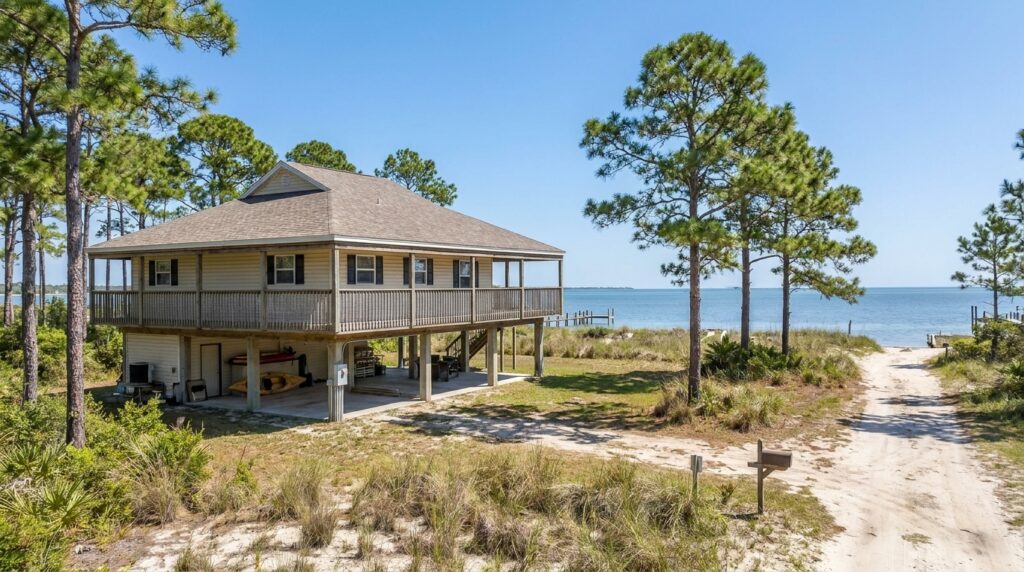
What are the FEMA flood zone designations for second homes near Indian Pass in Gulf County, FL, and how do they affect eco-friendly building options in 2026?
Most properties near Indian Pass fall within FEMA’s VE or AE high-risk flood zones, requiring elevated construction on pilings that shapes every eco-friendly design decision you make for a second home in Gulf County.
Why This Matters Right Now in Gulf County
If you’re an eco-conscious buyer looking at a second home near Indian Pass, you’re walking into a fascinating intersection of environmental stewardship and regulatory reality. Gulf County’s coastline remains one of the most undeveloped stretches in Florida, with St. Vincent National Wildlife Refuge sitting right across the water and sea turtles nesting on beaches that feel untouched. That natural beauty is exactly what draws you here.
But the same geography that makes Indian Pass so pristine also makes it vulnerable. The area is low-lying, sandwiched between the Gulf of Mexico and Indian Lagoon, and FEMA’s flood maps reflect that reality. With the Florida Building Code’s Ninth Edition taking effect December 31, 2026, and FEMA’s Risk Rating 2.0 reshaping insurance pricing, the rules of the game are shifting. Having helped close over 300 transactions in this area over the past 13 years, I can tell you that understanding these designations before you fall in love with a lot is the single most important step you can take.
Understanding Gulf County’s FEMA Flood Zone Map Near Indian Pass
You need to know exactly which zone your prospective property sits in because each designation carries different building requirements, insurance costs, and design constraints. Here’s what you’ll encounter in the Indian Pass area:
VE Zones (Velocity Zones)
This is the most common designation along the Indian Pass shoreline and Gulf-front parcels. VE zones carry FEMA’s strictest requirements. You’re dealing with a 1% annual chance of flooding combined with wave action of three feet or more. For a 30-year mortgage, that translates to at least a one-in-four chance of flooding during your ownership.
What does that mean practically? Your home must be elevated on open pilings, posts, or columns. The lowest horizontal structural member needs to sit at or above the Base Flood Elevation, which typically runs between 14 and 18 feet NAVD88 in this part of Gulf County. No fill is allowed to raise the ground. Breakaway walls are required below the BFE.
AE Zones
Properties along Indian Lagoon and lower-lying interior areas near Indian Pass typically carry an AE designation. These are still high-risk, with a 1% annual chance of flooding, but without the wave-action component. Base Flood Elevations are established, and you’ll need to build at or above them, though you have slightly more flexibility in foundation design than VE zones allow.
X Zones (Shaded and Unshaded)
Higher-elevation parcels set back from the coast may fall into shaded X zones (moderate risk, 0.2% annual chance). Unshaded X zones, representing minimal flood risk, are rare near Indian Pass and more common inland toward Wewahitchka. If you can find an X-zone parcel with Gulf views, you’ve struck gold, but don’t count on it.
One couple I worked with last year had their heart set on a Gulf-front lot near Indian Pass. When we pulled the flood zone data, they discovered the VE designation meant their dream single-story cottage was structurally impossible. We pivoted to a stunning elevated design that actually gave them better views and cross-ventilation than the original plan ever would have.
How Flood Zones Shape Your Eco-Friendly Building Choices in Indian Pass
Here’s where it gets interesting for green-minded buyers. The flood zone requirements don’t eliminate sustainable building; they redirect it. You just have to think creatively.
What works in VE and AE zones:
- Metal roofing that’s both hurricane-rated and highly recyclable, with excellent solar panel mounting potential
- Impact-resistant, high-performance windows that double as energy-efficiency upgrades, reducing cooling costs significantly
- Elevated rooflines on stilt homes that provide outstanding solar exposure for photovoltaic systems
- Native landscaping with sea oats and coastal grasses that stabilize dunes while supporting local ecosystems
- Natural under-home ventilation that reduces cooling loads, since elevated structures allow airflow beneath the living space
What gets complicated:
- Ground-source heat pumps are essentially off the table in VE zones
- Passive solar design requires creative adaptation when your living space starts 15 feet off the ground
- Rainwater harvesting cisterns below BFE must be engineered to withstand flood forces or elevated at additional cost
- Eco-friendly materials like bamboo flooring or cellulose insulation may not meet flood-damage-resistant material standards below BFE
So what do I tell my clients? Embrace the elevation. A well-designed elevated home with solar panels, a metal roof, and native landscaping is both a green building and a climate-resilient one. Those aren’t competing goals; they’re the same goal.
The Coastal Barrier Resources Act and Insurance Reality for Gulf County Second Homes
Here’s something that catches buyers off guard. Portions of the Indian Pass area may fall within the Coastal Barrier Resources System. If your property is inside a CBRS unit, federal flood insurance through the National Flood Insurance Program is not available. You’d need private flood insurance, which exists but typically costs more.
Even outside CBRS boundaries, FEMA’s Risk Rating 2.0 methodology now prices flood insurance based on individual property characteristics rather than just zone designation. For coastal properties near Indian Pass, annual flood insurance premiums can range from $3,000 to over $10,000, depending on elevation, distance from water, and structure type.
What does that actually mean for your budget? A buyer I recently guided through the process on Cape San Blas was initially shocked by a $7,200 annual flood insurance quote. But after we worked with their builder to incorporate FORTIFIED Home certification from the Insurance Institute for Business and Home Safety, along with exceeding the minimum BFE by two feet, the premium dropped meaningfully. Those same upgrades, including impact-resistant glazing and enhanced roof-to-wall connections, were already part of their sustainability plan.
With Gulf County’s real estate market median home price sitting around $410K and homes averaging 121 days on market, you have negotiating room that didn’t exist two years ago. Buyers have more leverage in 2026 than they’ve had since before the pandemic.
Navigating Gulf County’s Regulatory Layers for Green Construction
Your eco-friendly build near Indian Pass doesn’t just answer to FEMA. Multiple regulatory layers apply, and understanding them upfront saves you months of headaches.
Gulf County Building Department currently enforces the Florida Building Code 2023 (Eighth Edition), with the Ninth Edition taking effect December 31, 2026. If you’re designing now and building next year, your plans need to anticipate the updated code.
The Coastal Construction Control Line (CCCL) is administered by the Florida Department of Environmental Protection. Construction seaward of this line requires additional environmental and structural review. If you’re building on a Gulf-front lot, expect this to add time and complexity.
Septic permitting shifted to the FDEP as of January 1, 2025. Gulf County’s Environmental Health Department no longer issues these permits. This is actually good news for eco-conscious buyers because FDEP oversight opens the door to advanced nitrogen-reducing wastewater systems that protect sensitive water bodies like Indian Lagoon. You’ll submit applications online through FDEP’s portal, but verify that your application meets all Gulf County Board of County Commissioners ordinance and density requirements before submitting.
Wind speed requirements in Gulf County exceed 150 mph per the Florida Building Code wind speed map. Every solar mounting system, every rooftop wind turbine, and every exterior feature must be engineered to that standard.
Gulf County’s Eco-Building Sweet Spot in 2026
The Forgotten Coast, including Indian Pass, Cape San Blas, and neighboring St. George Island, offers something rare: the chance to build a genuinely sustainable second home in one of Florida’s last unspoiled coastal landscapes. With 13 years of experience in this market and a 5 out of 5 rating from 33 client reviews, I’ve watched buyers navigate these decisions successfully time and again.
The sweet spot for eco-conscious buyers in 2026 looks like this:
- Target AE zone parcels slightly inland from Indian Pass for more design flexibility
- Design elevated structures that maximize cross-ventilation and solar exposure
- Use hurricane-rated, sustainable materials (metal roofing, fiber-cement siding, FSC-certified structural lumber)
- Plan for FORTIFIED Home certification to earn insurance discounts while building green
- Invest in native coastal landscaping that doubles as natural storm protection
- Explore advanced wastewater systems through the new FDEP permitting process
Frequently Asked Questions
What flood zone is most common near Indian Pass in Gulf County?
The VE (Velocity) zone is the predominant designation along the Indian Pass shoreline and Gulf-front properties near St. George Island. VE zones carry the strictest building requirements, including mandatory open-piling foundations and elevation above the Base Flood Elevation, which typically ranges between 14 and 18 feet NAVD88 in this area. Interior parcels closer to Indian Lagoon generally fall within AE zones.
Can I build a single-story home in a VE flood zone near Indian Pass?
Your living space must sit at or above the Base Flood Elevation, so a “single-story” home is technically possible, but it will be elevated 14 to 18 feet on pilings. The ground level can only be used for parking, storage, or building access with breakaway walls. Many buyers find this design actually enhances views and natural cooling.
How much does flood insurance cost for a second home near Indian Pass?
Under FEMA’s Risk Rating 2.0, annual premiums for coastal Gulf County properties can range from $3,000 to over $10,000. Individual pricing depends on your property’s elevation, distance from the water, foundation type, and flood history. Building above the minimum BFE and pursuing FORTIFIED certification can help reduce premiums.
Are solar panels allowed on elevated homes in Gulf County flood zones?
Yes, solar panels are permitted and actually work well on elevated stilt homes, which provide excellent rooftop solar exposure. However, mounting systems must be engineered for Gulf County’s 150-plus mph wind speed requirements per the Florida Building Code. Metal roofing pairs particularly well with solar installations.
What is the Coastal Barrier Resources System and does it affect Indian Pass?
Portions of the Indian Pass area may fall within the Coastal Barrier Resources System, a federal designation that restricts availability of NFIP flood insurance. If your property is inside a CBRS unit, you’ll need private flood insurance. Always verify CBRS status before making an offer on any parcel.
Can I use composting toilets or alternative wastewater systems in Gulf County?
Septic and wastewater permitting moved to the Florida Department of Environmental Protection as of January 2025. FDEP oversight allows buyers to explore advanced nitrogen-reducing systems and alternative wastewater options. Contact FDEP directly and verify that your plan meets Gulf County’s local ordinance and density requirements.
What eco-friendly building materials work in VE flood zones?
Above the BFE, you have broad flexibility, including FSC-certified lumber, recycled-content insulation, and energy-efficient glazing. Below the BFE, all materials must be flood-damage-resistant. Some eco-friendly options like bamboo flooring or cellulose insulation may not qualify below BFE unless specifically rated for flood resistance.
How does the new Florida Building Code (Ninth Edition) affect building near Indian Pass in 2026?
The Ninth Edition takes effect December 31, 2026, updating the 2023 Eighth Edition with changes from the 2024 International Residential Code. If you’re planning construction, design to the new code now to avoid costly redesigns. The update includes enhanced energy-efficiency standards that align well with green building goals.
Is it possible to find non-flood-zone parcels near Indian Pass?
Parcels in the unshaded X zone (minimal flood risk) are rare near Indian Pass. Shaded X zones (moderate risk) exist on higher-elevation parcels set back from the coast. If minimizing flood-zone restrictions is a priority, explore properties slightly inland or consider the WindMark Beach area near Port St. Joe.
What is the FORTIFIED Home program and why does it matter for eco-building in Gulf County?
FORTIFIED is a voluntary construction standard from the Insurance Institute for Business and Home Safety that strengthens homes against severe weather. Achieving FORTIFIED designation can reduce insurance premiums while incorporating resilient, sustainable building practices. For Gulf County’s high-wind, high-flood-risk environment, it’s one of the smartest investments an eco-conscious buyer can make.
The Bottom Line
Building an eco-friendly second home near Indian Pass in Gulf County is absolutely achievable in 2026, but it requires understanding the regulatory landscape before you start dreaming about finishes. Your FEMA flood zone designation, whether VE or AE, will dictate your foundation type, your elevation, your materials below BFE, and a significant chunk of your annual insurance costs. The good news is that many flood-zone requirements actually complement sustainable design rather than fighting it.
If you’re ready to explore Gulf County properties and investment opportunities, from Indian Pass to Cape San Blas to St. George Island, I’d love to walk you through the process. With over 300 transactions in this market and a lifetime spent on this coast, I know which parcels offer the best combination of eco-building potential, flood-zone positioning, and long-term value. Give me a call at 850-653-7893 or reach out through Melissa Chandler Real Estate at 140 W 1st Street, St. George Island, FL 32328. Let’s find the right piece of the Forgotten Coast for you.