Selling Your Apalachicola Home in 2026 While Relocating Out of State
September 29, 2026 by Melissa Chandler
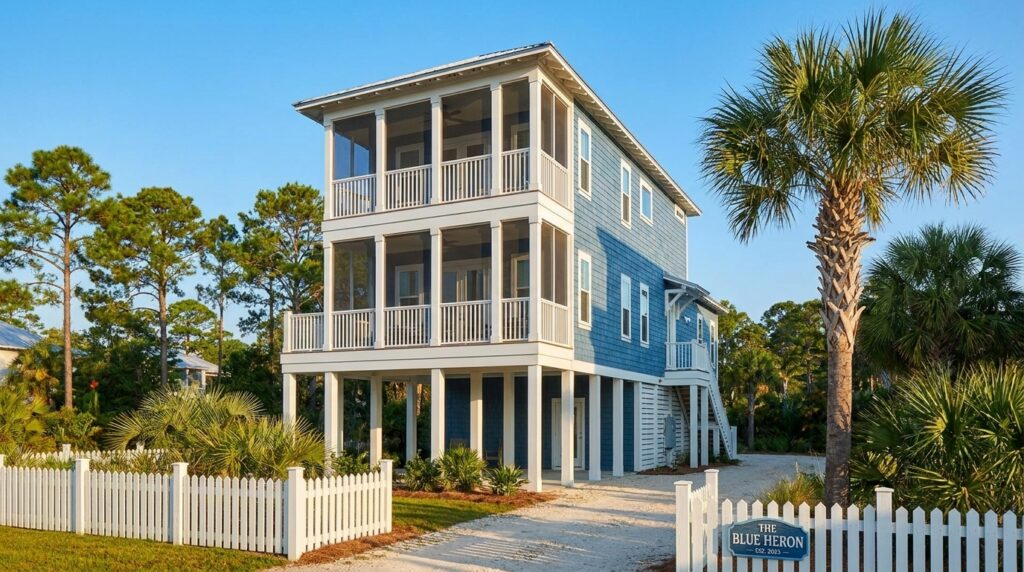
How do I sell my Apalachicola FL home in 2026 when I am relocating out of state and need the sale proceeds to close on my next house before I leave?
You can sell your Apalachicola home on a relocation timeline by pricing strategically for the current market, exploring bridge financing to decouple your two transactions, and working with a local agent who can manage the sale after you leave.
Why This Matters Right Now in Apalachicola
I grew up on this coast. My family moved to St. George Island in 1968, and I’ve watched this market through every cycle since. What I’m seeing in 2026 is a window that demands honest conversation, not a sales pitch.
Apalachicola’s market has shifted. The average home value is $302,329, down 3.8% over the past year as of July 2026, per local MLS data. Over the three months ending June 2026, home prices dropped 12.0% compared to the same period last year, with a median sale price of $350K. On average, homes sit 93 days on market, and the housing market scores just 6 out of 100 for competitiveness.
What does that mean for you? Buyers have leverage right now, and if you need your sale proceeds to close on a home in another state, you cannot afford to overprice and wait. Your timeline is not flexible, so your pricing strategy has to be. This is the reality I walk sellers through every day, and getting it right from the start is the difference between a smooth relocation and a financial nightmare.
Pricing Your Apalachicola Home to Sell on a Relocation Timeline
Here is the honest truth: in a market where homes are sitting 93 days on average and only scoring 6 out of 100 for competitiveness, your listing price is the single most powerful tool you have.
The median listing price per square foot in Apalachicola sits at $163, according to WalletInvestor data as of June 2026. But you need to look beyond broad medians. If your home is in the Historic Downtown district near Market Street or Commerce Street, restored Victorian cottages and live/work properties tend to list between $320K and $500K or more. In the residential Victorian district along Avenue D and the 6th Street corridor, renovated homes typically fall between $275K and $400K.
The mistake I see sellers make, especially those in a rush, is pricing for what the home “should” be worth based on what they paid or what a neighbor sold for two years ago. Median home values have climbed past $295,000 as of 2026, up from under $180,000 in 2019, per Undiscovered America TV reporting. That roughly 64% increase over seven years means most homeowners have real equity. But year-over-year values have softened: WalletInvestor shows a 0.453% decrease between June 2025 and June 2026, and values fluctuated throughout that stretch, increasing four times and decreasing six times.
So what should you do? Price at or slightly below current comparable sales. In a town where only 43 homes sold over the trailing period, every overpriced listing that sits becomes stale inventory. You don’t have time for that.
Bridge Financing and How to Decouple Your Two Transactions
The biggest question I hear from relocating sellers is some version of, “How do I buy my next house if my money is tied up in this one?” You have several real options.
Bridge Loans
A bridge loan lets you borrow against the equity in your Apalachicola home to fund the down payment on your new out-of-state purchase. Terms typically run six to twelve months, with interest rates running roughly 1.5% to 3% above conventional mortgage rates. This is the most direct way to break the dependency chain between your sale and your purchase.
Home Equity Lines of Credit (HELOC)
If you have time before listing, establishing a HELOC gives you flexible access to your equity. The key is to set this up before you list. Once a home is actively on the market, lenders become far less willing to extend new HELOCs on it.
Contingent Offers With Realistic Expectations
You can make your out-of-state purchase contingent on the Apalachicola sale, but understand the trade-off. In competitive markets, contingent offers are often passed over. If your destination market is hot, this approach may cost you the house you want.
Having closed over 300 transactions along this coast over the past 13 years, I can tell you that the sellers who relocate most smoothly are the ones who plan their financing structure before they ever put a sign in the yard.
Targeting the Right Apalachicola Buyer Pool for a Faster Close
You might wonder: who is actually buying in Apalachicola right now? Understanding your buyer pool shapes everything, from how you market the home to how you stage it.
Remote Workers and Lifestyle Buyers
In 2026, Apalachicola is caught between two futures, as local reporting describes it, one belonging to shrimpers and oystermen, the other belonging to remote workers paying cash for Victorian cottages. This second group is your fast-close candidate. Cash buyers eliminate appraisal and financing contingencies, which can shave weeks off your timeline.
Short-Term Rental Investors
Apalachicola has 1,022 active short-term rental listings as of August 2026, per AirDNA data. The average active listing earned $75.8K in revenue over the trailing twelve months, with 55% average occupancy and a $513 average daily rate. The area scores 77 out of 100 on investability. If your property can be marketed with STR revenue projections, you open the door to investors who move quickly because they’re making a business decision, not an emotional one.
Retirees and Second-Home Buyers
The Forgotten Coast’s combination of over 200 historically significant homes, James Beard-nominated restaurants, and proximity to St. George Island State Park continues to draw this segment. These buyers may need financing, which means longer timelines, so they’re not your ideal fit if speed is the priority.
What I tell my clients is this: the marketing materials should speak directly to the buyer most likely to close fast. That often means highlighting income potential alongside the charm of the original heart-pine floors and those wide 1830s-era streets.
Managing Your Apalachicola Sale After You Leave
Once you’ve relocated out of state, the logistics of selling become a real concern, especially in a small town where the nearest full-service supermarket is roughly 22 miles away in Port St. Joe.
Power of Attorney and Remote Closings
Florida allows remote online notarization (RON), which means you can sign closing documents from wherever you land. Executing a limited power of attorney before you leave allows your agent or attorney to handle certain documents on your behalf. This is standard practice, not an unusual request.
Pre-Listing Inspections
I strongly recommend completing a home inspection before listing. In a market where buyers have negotiating power, surprises during the inspection period are the number-one deal killer for time-sensitive sellers. Identifying and addressing issues proactively keeps your timeline intact and reduces the chance of renegotiations that drag everything out.
Local Support Team
Before you leave Apalachicola, establish relationships with a trusted local handyman, cleaning service, and lawn care provider. Your agent will coordinate showings, but the property needs to be maintained and show-ready throughout. With 13 years of working this coast and a rating of 5 out of 5 stars from 33 client reviews, I’ve built the local network that makes remote sales work without the homeowner losing sleep.
Florida-Specific Costs and Legal Considerations for Apalachicola Sellers
You need to know exactly what comes out of your proceeds before you count on that money for your next purchase. Understanding all the costs of buying a home and selling is essential to your financial planning.
- Documentary stamp tax: Florida charges $0.70 per $100 of the sale price. On a $350K sale, that is $2,450 out of your proceeds.
- No state income tax: Florida has no state income tax on capital gains, which is a significant benefit if you’ve built substantial equity since purchasing.
- Homestead exemption portability: If your Apalachicola home carries a homestead exemption, understand that the “Save Our Homes” portability benefit only transfers to a new Florida homestead, not to an out-of-state purchase. You lose that benefit when you leave.
- Insurance disclosure: The average Citizens Property Insurance premium in Franklin County runs about $2,575 a year, according to Citizens data. Buyers will ask about insurance costs, and being transparent upfront prevents late-stage deal fallout. Having documentation ready is something I always prepare for my sellers.
- Title insurance: Florida is a title-insurance state. Closings are handled by title companies or attorneys, not escrow companies, which matters if you’re relocating to a state where escrow is the norm.
Frequently Asked Questions
How long does it take to sell a home in Apalachicola in 2026?
On average, homes in Apalachicola sell after 93 days on market as of mid-2026, per local MLS data. Correctly priced homes in good condition tend to move faster than that average, but you should plan for at least a three-month window from listing to closing when building your relocation timeline.
Can I close on my Apalachicola home sale remotely from another state?
Yes. Florida allows remote online notarization (RON), and you can execute a limited power of attorney before you leave so your agent or attorney can handle certain paperwork on your behalf. This is a routine part of relocation sales, not an exception.
What is a bridge loan and should I use one to buy my next home?
A bridge loan lets you borrow against the equity in your current home to fund the down payment on your next purchase. Terms typically run six to twelve months with interest rates running about 1.5% to 3% above conventional mortgage rates. If your relocation timeline cannot wait for the Apalachicola sale to close, this is one of the most practical options.
How should I price my Apalachicola home for a fast sale in 2026?
Price at or slightly below current comparable sales. The median listing price per square foot is $163 as of June 2026 per WalletInvestor, but your pricing should reflect the property’s specific condition, location, and recent neighborhood comps. In a market scoring 6 out of 100 for competitiveness, overpricing is the costliest mistake.
Are short-term rental investors a good buyer pool for my Apalachicola home?
Yes. Apalachicola has 1,022 active STR listings earning an average of $75.8K annually with 55% occupancy, per AirDNA data as of August 2026. The area scores 77 out of 100 on investability. STR investors often pay cash and close faster than traditional buyers.
What are the seller closing costs in Apalachicola, FL?
Beyond the standard real estate commission, you will owe Florida documentary stamp tax at $0.70 per $100 of the sale price, title insurance costs, and any agreed-upon repair credits. There is no state income tax on capital gains in Florida.
Should I do a home inspection before listing?
Absolutely. A pre-listing inspection lets you identify and address issues before a buyer’s inspector finds them. In a market where buyers have leverage, surprises during the inspection period are the most common reason relocating sellers lose weeks on their timeline.
Can I negotiate a rent-back if my home sells before I’m ready to move?
Yes. A post-closing occupancy agreement, sometimes called a rent-back, allows you to remain in the home for a negotiated period (typically 30 to 60 days) after closing. This gives you a buffer to finalize your out-of-state move.
Will I lose my homestead exemption portability if I move out of Florida?
Yes. Florida’s Save Our Homes portability provision allows you to transfer up to $500,000 of your homestead benefit to a new Florida home. If you relocate out of state, that benefit does not follow you.
What makes Apalachicola’s real estate market unique compared to other Florida markets?
Apalachicola is a town of roughly 2,231 people with over 200 historically significant structures, per the National Trust for Historic Preservation. The buyer pool is a mix of remote workers, STR investors, retirees, and second-home seekers. Approximately 26% of homes are vacant, according to Census data, reflecting the seasonal and vacation-home nature of this market. Transaction volume is thin, with only 43 homes sold over the trailing period, so pricing precision matters more here than in larger Florida markets.
The Bottom Line
Selling your Apalachicola home while relocating out of state in 2026 is absolutely doable, but it requires a plan built around this market’s reality, not wishful thinking. Prices have softened, buyers have options, and your timeline is not flexible. That means pricing right from day one, exploring bridge financing if you need proceeds before closing, targeting STR investors and cash buyers who can move quickly, and putting the logistics in place for a remote sale before you leave.
I’ve been on this coast since 1968. I’ve closed over 300 transactions along the Forgotten Coast, and I’ve been recognized as a top 6% agent nationally with Berkshire Hathaway HomeServices. If you’re planning a relocation and need to sell your Apalachicola home on a timeline that actually works, I’d rather have an honest conversation with you than make a sales pitch. Call me at 850-653-7893 or reach out through Melissa Chandler Real Estate on St. George Island. Let’s build your plan.