Net Proceeds From Selling Your St George Island Beach House in 2026
November 6, 2026 by Melissa Chandler
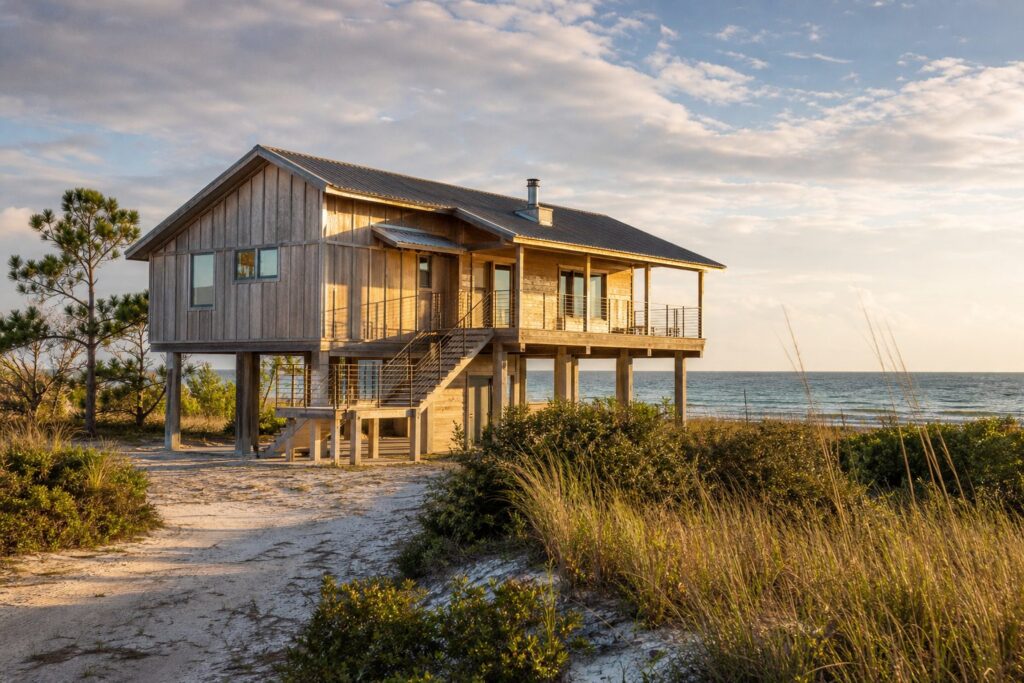
What will my net proceeds be after selling my St George Island beach house in 2026 once I factor in agent commissions, flood insurance proration, and closing costs before I relocate?
Most St George Island sellers in 2026 can expect to net roughly 91% to 94% of their sale price after commissions, documentary stamp taxes, title insurance, and other closing costs, with flood insurance proration adding a small credit or debit depending on timing.
Why This Matters Right Now for St George Island Sellers
If you’re preparing to relocate away from the Forgotten Coast, the number on your closing statement matters more than the number on the yard sign. In July 2026, homes on St George Island sold for a median price of $1,200,000, with that median up 13.8% year-over-year, according to local MLS data. That sounds fantastic until you realize that on a million-dollar-plus sale, commissions and closing costs alone can easily exceed $80,000.
You need a clear picture of what actually lands in your account, not what the sale price looks like on paper. With 13 years of experience and over 300 closed transactions on this coast, I can tell you that the sellers who feel best about their outcome are the ones who understood these numbers before they ever signed a listing agreement. The market here is active but selective; homes are sitting an average of 134 days on market as of mid-2026, per local MLS data. Pricing right and understanding your true bottom line go hand in hand.
How Agent Commissions Affect Your St George Island Net Proceeds
Commissions are almost always the single largest cost you’ll face as a seller, and on St George Island they can represent a significant dollar amount because of the price range we’re working in.
Since the NAR settlement changes took effect in 2024, commission structures have shifted. The listing agent commission typically runs 2.5% to 3% of the sale price. Whether you, as the seller, also offer compensation to the buyer’s agent is now a separate negotiation, but most sellers on St George Island still choose to offer 2% to 3% to attract the broadest pool of qualified buyers. For a home selling at the island’s median of $1,200,000, that math looks like this:
- Listing agent at 3%: $36,000
- Buyer’s agent at 2.5%: $30,000
- Total commission: $66,000
And if your home is in the Plantation, where the median hovers around $1.1 million or higher, or if you’re selling a Gulf-front estate north of $1.5 million, those numbers climb accordingly.
- At $825,000 (the reported median sale price per Flat Fee MLS data, 2026): Total commissions at 5.5% would be approximately $45,375
- At $1,500,000: Total commissions at 5.5% would be approximately $82,500
What I tell my clients is this: don’t fixate on the commission percentage in isolation. A well-priced, well-marketed home that attracts competitive offers and closes smoothly will net you more than a property that sits for months and eventually sells below ask. On the Forgotten Coast, homes are selling for approximately 94.5% of list price on average, per regional market data. That gap between list and sale price can cost you far more than any commission.
Flood Insurance Proration on St George Island: What You’ll Owe or Receive
This is where barrier island sales get uniquely complicated. Every property on St George Island sits in a FEMA-designated flood zone (Zone VE or AE for most structures), and you almost certainly carry a flood insurance policy, either through the National Flood Insurance Program or a private carrier.
How NFIP Policy Proration Works
Under FEMA’s Risk Rating 2.0, which went into effect in October 2021, NFIP policies are generally not transferable to the buyer. When you sell, you’ll cancel your policy and receive a prorated refund for the unused portion of your annual premium. If you paid a $6,000 annual premium on January 1 and close on July 1, you’d receive roughly $3,000 back from the insurer.
Private Flood Insurance Policies
Private flood policies may or may not be transferable, depending on your carrier. If your policy can transfer, the buyer reimburses you at closing for the remaining coverage period. If not, you cancel and receive whatever refund the carrier offers.
Why This Matters to Your Buyer
Here’s something many relocating sellers overlook: if you cancel an NFIP policy, the buyer must obtain a brand-new policy at current Risk Rating 2.0 rates, which have generally increased for coastal barrier island properties. This can affect the buyer’s willingness to pay top dollar. Citizens, Florida’s state-backed insurer of last resort, covers 115 homes in Franklin County at an average premium of about $2,575 per year, according to Citizens data. That’s a rising number, and it signals where private insurers have pulled back. Understanding how your insurance situation affects the buyer’s calculus is part of pricing your home strategically.
Florida Closing Costs That St George Island Sellers Must Pay
Beyond commissions and insurance, you’ll face several mandatory costs at the closing table. In Florida, the seller customarily pays for the owner’s title insurance policy and the documentary stamp tax on the deed. Here’s what those look like at various price points:
Documentary Stamp Tax
Florida charges $0.70 per $100 of the sale price, per Florida statute. On a $1,200,000 sale, that’s $8,400. On a $825,000 sale, it’s $5,775.
Title Insurance
Florida uses a promulgated rate of approximately $5.75 per $1,000 of sale price for the owner’s title insurance policy.
- At $825,000: approximately $4,744
- At $1,200,000: approximately $6,900
- At $1,500,000: approximately $8,625
Other Seller Costs
- Title search and examination: $200 to $500
- Settlement or closing fee: $300 to $800
- HOA estoppel letter (Plantation sellers): $100 to $500
- Property tax proration: Varies by closing date. Franklin County’s property tax rate is 0.62%, below the national average, per county assessor data
- Mortgage payoff: Your remaining balance plus per diem interest through the closing date
- Survey, if required: $300 to $600
- Termite/WDO inspection, if negotiated: $75 to $150
When I add all of these together for a typical St George Island sale at $1,200,000, total closing costs (excluding commissions) run approximately $16,800. With commissions at 5.5%, the total deductions from your sale price climb to roughly $82,800.
A Full Net Proceeds Breakdown for a St George Island Home Sale
So what does the full picture actually look like? Let me walk you through a realistic scenario using the island’s July 2026 median sale price of $1,200,000.
- Sale price: $1,200,000
- Less listing agent commission at 3%: $36,000
- Less buyer agent commission at 2.5%: $30,000
- Less documentary stamp tax: $8,400
- Less title insurance: $6,900
- Less other closing costs (title search, settlement fee, survey, etc.): approximately $1,500
- Flood insurance proration: This could be a credit of $1,500 to $4,000 back to you, or a charge to the buyer at closing, depending on timing and policy type
- Property tax proration: Variable, but with Franklin County’s 0.62% tax rate on a $1,200,000 home, you’re prorating roughly $7,440 annually, so the adjustment depends on when in the year you close
- Estimated net proceeds before mortgage payoff: approximately $1,117,200 to $1,121,200
That translates to roughly 93% to 94% of your sale price staying in your pocket, assuming no outstanding mortgage. If you still owe on the property, subtract that payoff amount.
What does that mean in practical terms for your relocation? On a home at the lower end of the island’s range, say $825,000, you might net somewhere around $755,000 to $770,000 after everything. On a Plantation estate selling for $1,500,000, expect to walk away with roughly $1,380,000 to $1,400,000 before any mortgage payoff.
How St George Island’s Market Conditions Shape Your Net in 2026
Your net proceeds don’t exist in a vacuum; they’re a product of what a buyer will actually pay, how long the process takes, and how precisely you price.
As of mid-2026, the median price per square foot on St George Island sits at $619, up 24.5% year-over-year, per local MLS data. But the broader picture shows that homes are averaging 134 days on market. Properties on this island don’t move like suburban inventory; the buyer pool is selective, and most purchasers are coming from Atlanta, Birmingham, Tallahassee, or Tampa.
With over 300 transactions behind me on this coast, I’ve seen what happens when sellers overprice: the listing sits through peak rental season, carrying costs pile up, and the eventual sale price can end up lower than where the market was when they listed. Understanding your pricing strategy and market conditions has a direct, measurable impact on your net proceeds. An overpriced home that sells for 90% of list after 200 days will net you less than a strategically priced home that attracts offers in the first 60 days.
The sub-market matters, too. A Gulf Beaches cottage on E Gulf Beach Drive trades differently than a Plantation estate on Sailfish Drive. The Plantation tends to attract larger lots and higher price points; Gulf Beaches, platted in 1952, offers a mix of everything from bungalows to modern elevated estates. Each neighborhood’s buyer pool has different expectations, and pricing to match those expectations protects your net proceeds.
Frequently Asked Questions
What percentage of my sale price will I actually keep when selling on St George Island?
Most sellers net approximately 91% to 94% of their sale price after commissions, closing costs, and prorations. The exact percentage depends on your commission structure, any outstanding mortgage balance, and the timing of your closing relative to your flood insurance and property tax payment dates.
Are flood insurance premiums refundable when I sell my St George Island home?
If you hold an NFIP policy, you can cancel it after closing and receive a prorated refund for the unused portion of your premium. Private flood policies vary by carrier. Some allow transfer to the buyer, while others issue a refund upon cancellation.
Who pays for title insurance in a Florida real estate transaction?
In Florida, the seller customarily pays for the owner’s title insurance policy. The cost follows a state-promulgated rate of approximately $5.75 per $1,000 of the sale price. On a $1,200,000 sale, that comes to roughly $6,900.
What is the documentary stamp tax on a St George Island home sale?
Florida’s documentary stamp tax is $0.70 per $100 of the sale price, per Florida statute. For a home selling at $1,200,000, you’d owe $8,400 in documentary stamps at closing.
How long are homes taking to sell on St George Island in 2026?
As of mid-2026, the average days on market for St George Island homes is 134 days, per local MLS data. This varies by district, price point, condition, and whether the home has documented vacation rental income.
Do I need to pay capital gains tax on my St George Island beach house?
If the property was your primary residence for at least two of the last five years, you may qualify for the federal capital gains exclusion of up to $250,000 (single) or $500,000 (married filing jointly). If it was a second home or investment property, capital gains taxes will likely apply. Consult a tax professional for your specific situation.
Does rental income history affect my sale price on St George Island?
Yes. Many buyers on St George Island evaluate properties primarily on rental yield. Sellers with documented rental income history should prepare a complete rental income summary. Some island properties have generated over $100,000 in annual gross rental income, per recent listing data, which directly influences what buyers are willing to pay.
What are typical seller closing costs on a $825,000 St George Island home?
At $825,000, expect approximately $5,775 in documentary stamps, roughly $4,744 in title insurance, and around $1,500 in miscellaneous fees (title search, settlement, survey), totaling approximately $12,019 before commissions.
How do property taxes factor into my closing on St George Island?
Franklin County’s property tax rate is 0.62%, below the national average, per county assessor data. At closing, property taxes are prorated between you and the buyer based on the closing date. Depending on whether you’ve prepaid or are in arrears, you’ll either receive a credit or owe a portion.
Should I sell my St George Island home before or after hurricane season?
Listing before or during hurricane season isn’t inherently bad, but it does affect buyer psychology and insurance timing. What matters more is pricing accurately for current conditions and having your insurance documentation organized. With 33 five-star reviews from past clients, I’ve guided sellers through closings in every season; the key is preparation, not timing the calendar.
The Bottom Line
Selling your St George Island beach house and relocating involves more moving parts than a typical mainland sale. Between commissions, documentary stamp taxes, title insurance, flood insurance proration, and property tax adjustments, you’re looking at roughly 6% to 9% of your sale price coming off the top, depending on your commission arrangement.
But here’s what I want you to remember: the number that matters most is the one you walk away with, and that number is shaped by how well you price, prepare, and market from day one. My family has been on this island since 1968, and I’ve spent 13 years and over 300 transactions helping people navigate exactly these decisions. If you’d like a detailed net proceeds estimate based on your specific property, whether it’s in the Plantation, Gulf Beaches, or out toward the East End, I’d welcome that conversation. You can reach me, Melissa Chandler, at 850-653-7893 or visit my office at 140 W 1st Street on St George Island.