Verifying Energy Efficiency in Apalachicola FL Second Home Listings
September 24, 2026 by Melissa Chandler
How do I verify whether a second home listing in Apalachicola, FL is truly energy-efficient or just greenwashed in 2026?
You verify it by requesting a HERS Index score, 12 months of utility bills, and recognized third-party certifications, then commissioning an independent energy audit before closing. Marketing language alone means nothing.
Why This Matters Right Now in Franklin County
I have lived and worked on this coast since my family moved here in 1968, and I can tell you that the conversation around “green” and “eco-friendly” homes in Franklin County has changed dramatically in just the past two years. Insurance costs are the biggest driver. The average Citizens Property Insurance premium in Franklin County runs about $2,575 a year, and that number climbs fast for homes without verified storm-resilient and energy-efficient features.
Here is the real issue: with just 59 active homes available in Franklin County as of August 2026, down from 72 last year, competition for quality listings is fierce. Sellers know that “energy-efficient” is a powerful marketing phrase. Some listings deserve the label. Others are borrowing the language without the receipts. If you are shopping for a second home in Apalachicola and sustainability matters to you, the difference between genuine performance and greenwashing could cost you tens of thousands over the life of ownership.
Understanding the Greenwashing Problem in Apalachicola’s Historic Market
So what does greenwashing actually look like in an Apalachicola listing? It is subtler than you might expect.
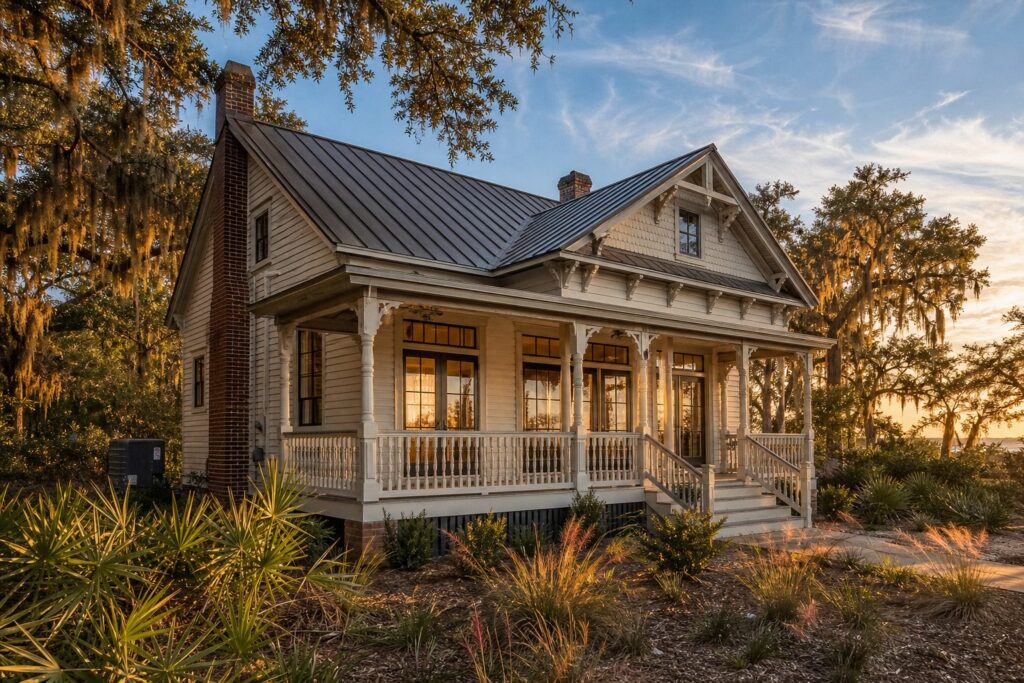
Apalachicola is a town where many of the most desirable homes date back to when Florida became a state. These homes feature a beautiful architectural style unique to the area, with wide porches, high ceilings, and heart pine floors. That character is precisely what draws second-home buyers to Franklin County. But character and energy performance are two very different things.
I have seen listings describe a home as “eco-friendly” because it has a ceiling fan and a newer water heater. I have seen “energy-efficient windows” turn out to be single-pane replacements from 2008 that would not meet today’s baseline code. One couple from Atlanta reached out to me about a listing near the Apalachicola River that was marketed as a “green coastal retreat.” When we dug into the details, the home had no insulation in the crawlspace, an HVAC system with a SEER rating of 10, and no documentation to support a single green claim. They loved the house, but they needed the truth before committing. That truth saved them from a surprise when their first summer electric bill would have arrived.
Here are the red flags you should watch for:
- “Energy-efficient windows” with no U-factor or SHGC rating provided
- “High-efficiency HVAC” with no SEER2 rating documented (truly efficient systems in Florida are 18+ SEER2)
- “Solar-ready” meaning nothing was actually installed
- “Green materials” with no product certifications to back the claim
- “Eco-friendly” used as a general descriptor, which has no legal or regulatory definition
The Seven-Step Verification Process for Franklin County Buyers
You do not need to be an engineer to vet energy claims. You just need a system. Having helped close over 300 transactions in this market over 13 years, I can tell you that the buyers who ask the right questions before writing an offer are the ones who sleep well after closing.
Step 1: Ask for the HERS Index Score
The Home Energy Rating System Index is the gold standard. A standard new home scores 100; a net-zero home scores 0. If the seller has a HERS rating certificate, they should be happy to share it. If they do not have one, that is not necessarily a deal-breaker, but it means you will need to hire a certified HERS rater through RESNET to get one. In a small market like Franklin County, you may need to bring in a rater from Tallahassee or Panama City, so plan ahead.
Step 2: Request 12 Months of Utility Bills
This is the simplest and most honest test. Ask for a full year of electric bills from the utility provider serving Franklin County. Compare the cost per square foot per month to what you would expect for a coastal Florida home. If the seller hesitates, ask yourself why.
Step 3: Look for Real Certifications
Legitimate programs that involve third-party verification include ENERGY STAR Certified Homes, LEED for Homes, the Florida Green Building Coalition certification, and the IBHS FORTIFIED Home designation. That last one is especially relevant here because it addresses storm resilience, which directly affects your insurance costs.
Step 4: Commission an Independent Energy Audit
Before closing, hire a BPI-certified energy auditor to conduct a blower door test, duct leakage test, thermal imaging scan, and HVAC efficiency assessment. This is not optional for a serious eco-conscious buyer. Think of it as the energy equivalent of a home inspection.
Step 5: Verify Each Specific Claim
If the listing says “impact windows,” ask for the product specifications and NFRC labels. If it says “spray foam insulation,” ask where and what R-value. Every claim should have documentation. No documentation, no credit.
Why Coastal Resilience and Energy Efficiency Are the Same Conversation in Apalachicola
You cannot separate energy efficiency from storm resilience on the Forgotten Coast. They are two sides of the same coin, and they both hit your wallet in the same place: your insurance premium.
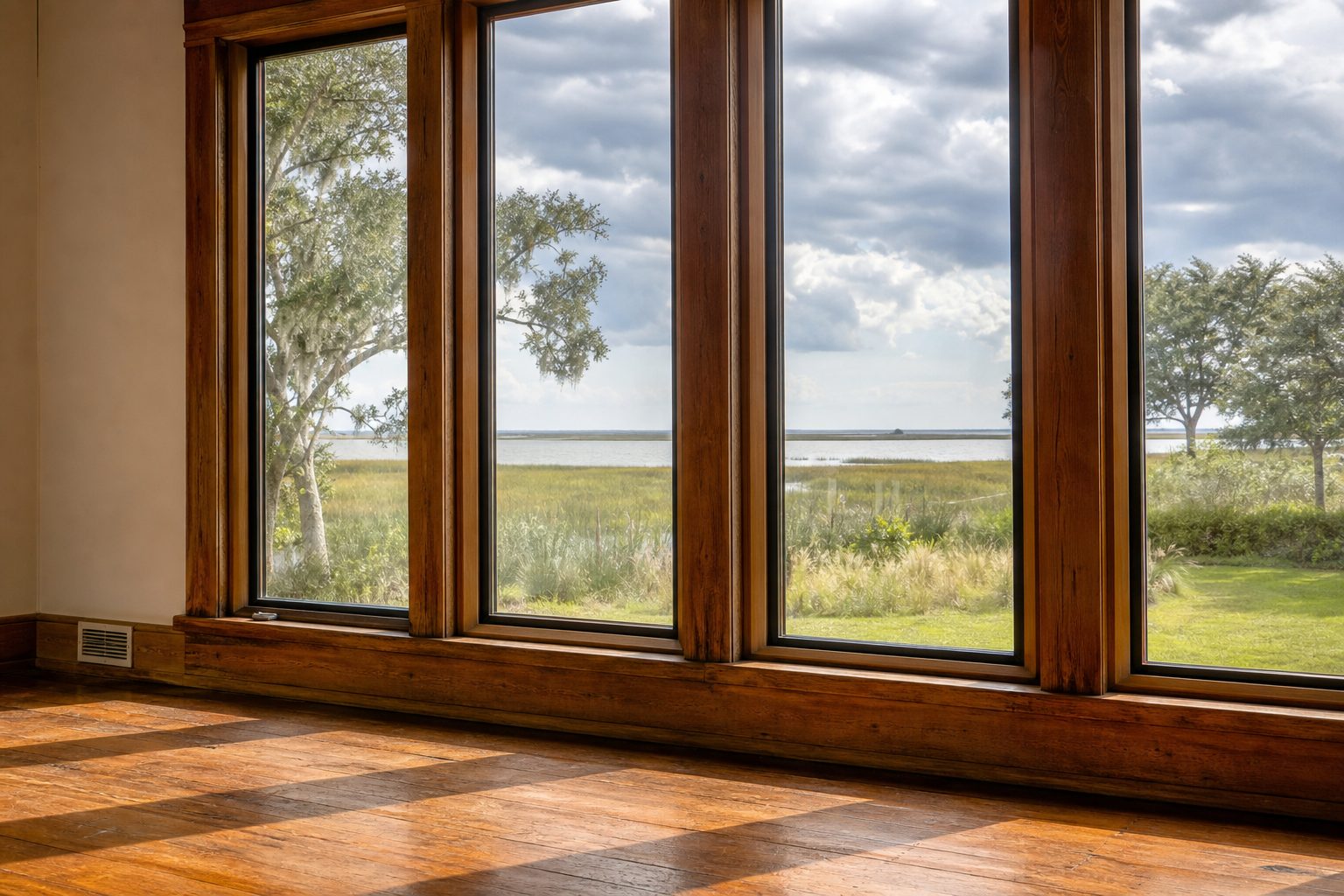
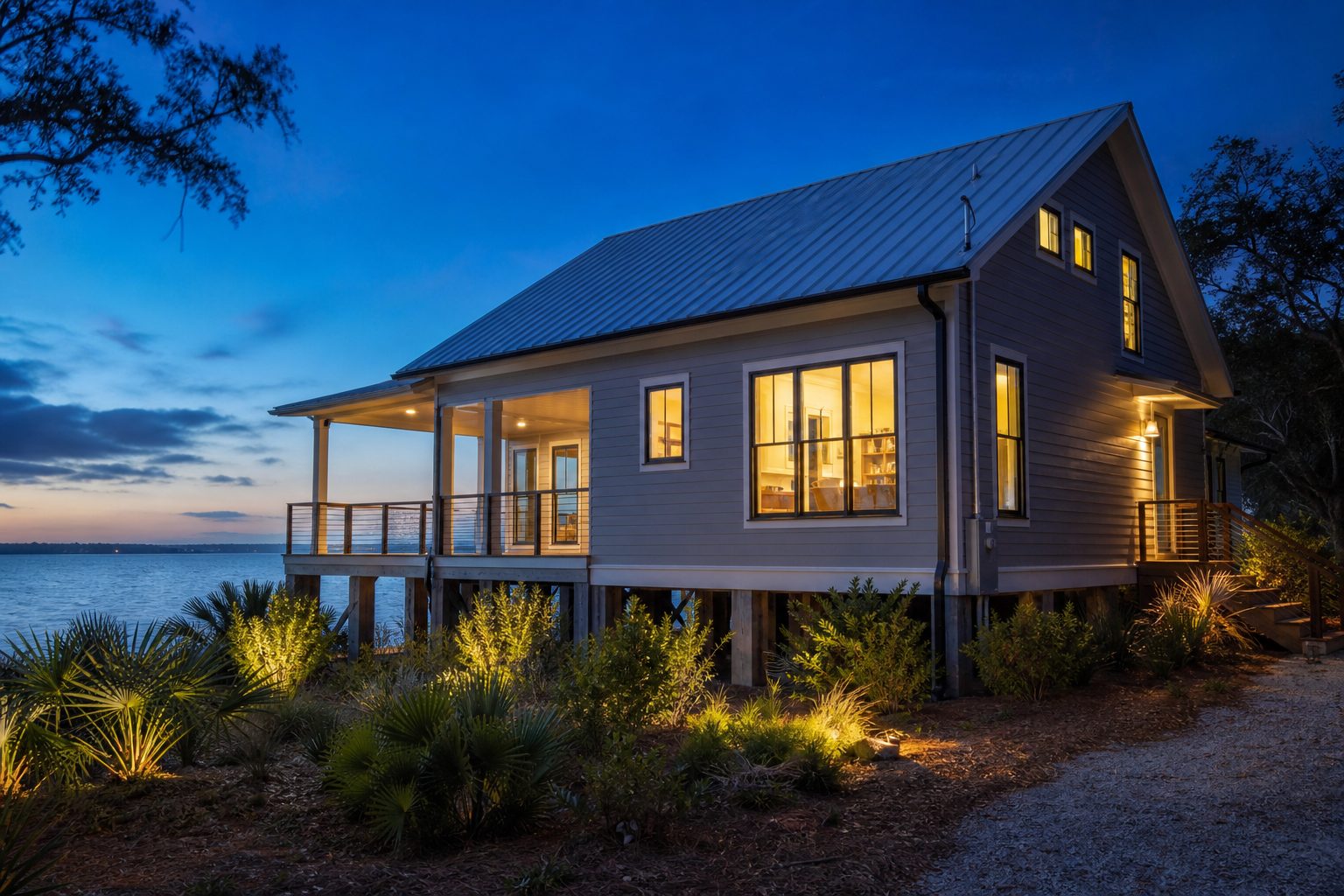
A metal roof, for example, is more durable in hurricane-force winds and more reflective, which reduces your cooling costs during those brutal Franklin County summers. Impact-rated windows keep your home safer during storms and provide better thermal performance year-round. Proper elevation reduces flood risk and, when documented with an elevation certificate, can dramatically lower flood insurance premiums.
What I tell my clients is this: when you are evaluating a second home in Apalachicola, ask for the wind mitigation inspection report. Florida requires one for insurance discount eligibility, and the findings will tell you a great deal about the home’s actual construction quality. Wind mitigation credits alone can reduce the wind portion of your premium by up to 45%.
One buyer I worked with from Nashville was torn between two properties near the bay. Both were priced in a similar range, close to the Apalachicola median of about $293,301. One had a FORTIFIED Home designation, documented impact windows, and a metal roof installed in 2021. The other had “energy-efficient upgrades” listed in the marketing remarks with no specifics. After running insurance quotes on both, the difference was over $1,800 per year. Over a decade, that adds up to more than the cost of a full kitchen renovation. The choice became obvious.
How Florida Building Code Fits Into Your Franklin County Due Diligence
Here is something many second-home buyers do not realize: a home that simply meets the Florida Building Code is not “energy-efficient.” It is baseline compliant. The 7th Edition of the Florida Building Code, Energy Conservation section, sets minimum standards. Truly efficient homes exceed code by 15 to 30 percent or more.
When you are reviewing a listing in Apalachicola, check with the Franklin County Building Department to confirm that permits were pulled for any energy-related upgrades. If someone tells you the HVAC was replaced or spray foam was added, there should be a permit on file. No permit raises questions about both the quality of the work and the accuracy of the listing description.
The Franklin County Property Appraiser’s office is another valuable resource. You can verify construction dates, documented improvements, and permitted additions. In a market with only 59 active listings and median sale prices above $254,000, every piece of verified information helps you compete smarter.
Financial Incentives That Reward Verified Efficiency in Franklin County
Your commitment to real energy efficiency pays off beyond lower utility bills. Several financing programs reward verified green features:
- FHA Energy Efficient Mortgages allow you to finance the cost of energy improvements into your mortgage
- Fannie Mae’s HomeStyle Energy program covers efficiency upgrades as part of a renovation loan
- PACE financing (Property Assessed Clean Energy) is available in Florida for qualifying energy upgrades
With the typical Franklin County home valued at $425,681 and mortgage rates near 6.52%, every dollar you save on operating costs matters. Verified energy efficiency can also support a stronger resale position when the time comes. The homes for sale in St. George Island and across Franklin County that can document their performance sell to the next generation of eco-conscious buyers more confidently.
Frequently Asked Questions
What is a HERS Index score, and what number should I look for in Apalachicola?
The HERS Index measures energy efficiency on a scale where 100 represents a standard new home and 0 means net-zero energy. For a second home in Apalachicola, look for a score of 70 or below to confirm genuinely above-average performance. Many older homes in the area will score well above 100 without upgrades.
Can a historic Apalachicola home actually be energy-efficient?
Yes, but it requires documented retrofitting. Historic homes can receive insulation upgrades, high-efficiency HVAC systems, and improved windows while preserving their character. The key is verifiable documentation for each improvement, not just a general claim in the listing.
How much can verified energy efficiency reduce my insurance premium in Franklin County?
Wind mitigation credits alone can reduce the wind portion of your premium by up to 45%. A FORTIFIED Home designation may unlock additional discounts. With the average Citizens premium in Franklin County at about $2,575 per year, these savings are significant.
Who conducts energy audits in the Apalachicola area?
BPI-certified energy auditors and RESNET-certified HERS raters serve the Franklin County area, though many travel from Tallahassee or Panama City. Schedule your audit early in the due diligence period because availability in this rural market can be limited.
What does “solar-ready” actually mean in a listing?
It typically means the roof orientation or electrical panel could accommodate solar panels, but nothing has been installed. It is not an energy-efficiency feature. Ask whether panels exist and whether there is a utility interconnection agreement in place.
Should I get an energy audit even if the home has an ENERGY STAR certification?
Yes. Certifications confirm the home met standards at the time of construction or certification. Subsequent modifications, aging systems, or deferred maintenance can change performance over time. An independent audit gives you a current snapshot.
Are there specific building code requirements for coastal Franklin County homes?
Florida’s 7th Edition Building Code sets minimum energy conservation standards. Coastal homes must also meet wind-borne debris region requirements. Meeting code is the floor, not the ceiling, for energy performance.
How do I check if energy upgrades were properly permitted?
Contact the Franklin County Building Department to verify permits for HVAC replacements, window installations, insulation work, and any structural modifications. Unpermitted work may not meet code and could affect your insurance eligibility.
Does the age of the roof matter for both efficiency and insurance?
Absolutely. Roof age is one of the most impactful factors in Florida insurance underwriting. A newer metal roof provides both superior thermal reflection, reducing cooling costs, and better wind resistance, reducing premiums.
How does flood zone designation affect my energy-efficiency evaluation?
Flood zone placement affects required elevation, which affects your overall building envelope. A home elevated above the Base Flood Elevation with proper enclosure below can be more energy-efficient due to better airflow and reduced moisture issues. Request the elevation certificate during your due diligence.
The Bottom Line
Buying a second home in Apalachicola that is genuinely energy-efficient, not just marketed that way, requires you to look past the listing language and demand documentation. Request the HERS score. Pull the utility bills. Verify every certification. Commission an independent audit. In Franklin County’s tight 2026 market, with only 59 active listings and prices continuing to rise, doing this homework protects both your investment and your values.
I have spent 13 years and over 300 transactions helping buyers navigate this coast with honest information. If you are searching for St. George Island real estate or evaluating second-home options anywhere in Franklin County, I would rather have an honest conversation about what a property truly offers than let you discover the truth after closing. Give me a call at 850-653-7893 or visit my office at 140 W 1st Street on St. George Island. This is my home, and I would be glad to help you find yours.