Short-Term Rental Permit Requirements in Apalachicola’s Historic District for 2026
September 17, 2026 by Melissa Chandler
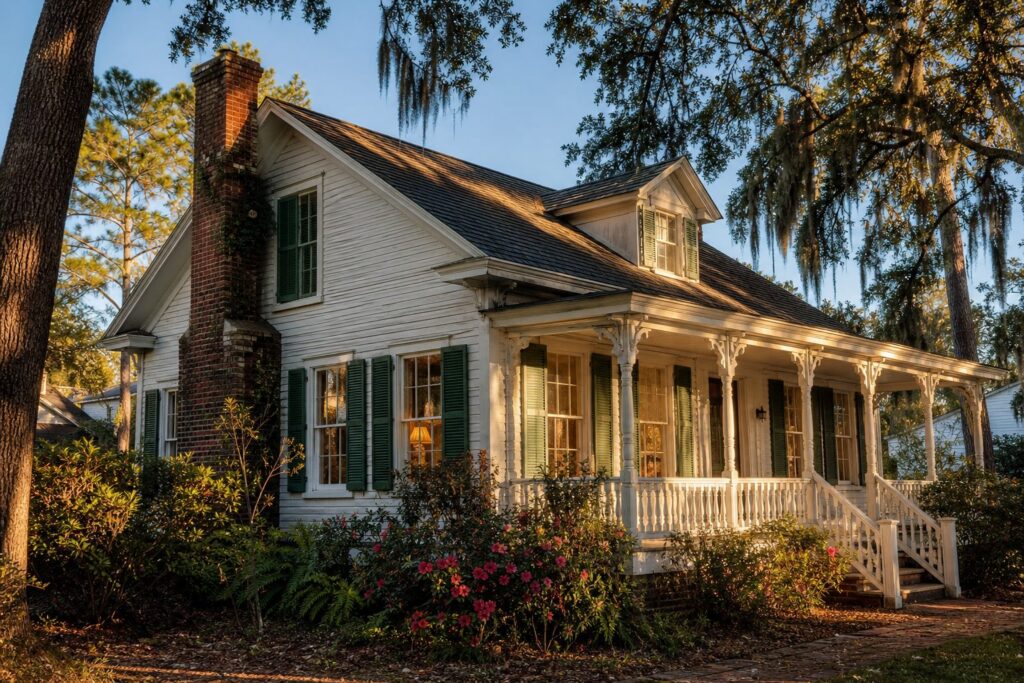
What are the short-term rental permit requirements in Apalachicola FL’s historic district in 2026, and how do they affect your investment returns?
You need a state DBPR vacation rental license, a City of Apalachicola business license, sales and tourist development tax registration, zoning verification, and historic preservation board compliance, all of which reduce your net operating income by roughly 35 to 45 percent of gross rental revenue.
Why This Matters Right Now in Apalachicola
If you have been eyeing a charming Victorian cottage on Fifth Street or a pre-Civil War home along Avenue E, you are not alone. Apalachicola’s historic district has over 200 historically significant homes and commercial structures, and investor interest has spiked since the pandemic brought remote workers from Atlanta, Nashville, and the Florida Gulf Coast real estate market to the Forgotten Coast.
But here is the thing most out-of-town investors miss: this is not a “buy it and list it” market. The permit structure in Apalachicola is layered, and the historic district adds requirements you will not find in a typical Florida beach town. With home prices down 12.0% year-over-year as of mid-2026 and a median sale price of $350,000 downtown, the entry point looks attractive. Whether you actually make money depends entirely on how well you navigate the compliance side. I have helped investors through over 300 transactions in 13 years on this coast, and permit surprises are the number one thing that blows up a first-year pro forma.
The Multi-Layer Permit Structure You Must Navigate in Apalachicola
You are dealing with three distinct levels of government, and you need to be compliant with all of them before a single guest checks in. Let me walk through each one plainly.
State Level: DBPR Vacation Rental License
Florida requires a Department of Business and Professional Regulation vacation rental license any time you rent an entire home or condo for stays under 30 days more than three times a year. The annual cost runs roughly $170 to $230 depending on your unit classification (single, group, or collective). You will need to create an online DBPR account, submit your application, and pass a safety inspection that checks Florida Building Code and Fire Prevention Code compliance.
One requirement that catches people off guard: your DBPR license number must appear in all advertising, and the physical license must be displayed inside the property. Florida also mandates human-trafficking awareness training and signage. Noncompliance on that alone can trigger fines of $2,000 per day.
County and State Tax Registration
You must register with the Florida Department of Revenue to collect and remit 6% state sales tax on all transient rental income. On top of that, Franklin County levies a tourist development tax, typically in the 4 to 6% range. Plan on sending more than 10% of every dollar you collect in rental fees back to the county and state before you pay a single bill.
City of Apalachicola: Business License and Zoning
Here is where it gets specific to this town. Apalachicola requires a local business license for every vacation rental operator. The city has published two fact sheets for vacation rentals, one for properties zoned Residential and one for properties zoned Commercial, and the requirements differ. You need to verify your zoning designation before you close on a property, not after.
What does that look like in practice? One investor I worked with found a beautiful cottage near Commerce Street that was zoned Residential. The fact sheet requirements for that zoning designation included occupancy limits and specific safety provisions that changed the unit’s income potential by nearly $6,000 a year compared to the Commercial-zoned property they had originally been considering two blocks away. That kind of detail matters.
Historic District Restrictions That Change Your Renovation Budget in Apalachicola
So you have found a gorgeous 1880s home on Sixth Street in Apalachicola’s historic district, and your plan is to update the kitchen, refresh the exterior, and list it as a premium vacation rental. Not so fast.
Properties within the historic district face additional oversight from the local historic preservation board. Exterior modifications, from paint colors to porch railings to window replacements, typically require board approval. The roughly 80 homes and buildings listed on the National Register of Historic Places have the strictest requirements, but even non-listed properties within the district boundaries fall under preservation standards.
The average year built for Apalachicola homes is 1933, and many downtown properties are far older. Renovation costs for these homes can run 20 to 40% higher than comparable work on newer construction because you are often dealing with historic materials, custom millwork, and board-mandated specifications. I always tell investors to budget a separate line item for preservation compliance. If you skip that, your renovation timeline and your returns will both suffer.
How Apalachicola’s STR Permit Costs Actually Affect Your Bottom Line
Let me put real numbers in front of you. This is the part where most blog posts get vague, so I want to be specific based on what I see in this market every day.
Gross revenue estimate for a historic district STR:
- Nightly rates in the historic district range from approximately $114 to $543, with a typical rate around $185 per night
- Peak season runs May through August; off-peak stretches from September through April
- At 50 to 60% annual occupancy and a $185 average nightly rate, you are looking at roughly $33,000 to $40,000 in gross annual revenue
Now subtract your compliance and operating costs:
- Taxes (approximately 12% combined): $4,200 to $4,800
- Property management (15% of revenue): $5,250 to $6,000
- STR-specific insurance: $2,000 to $3,500 (standard homeowners policies exclude short-term rental use)
- Maintenance and repairs on historic housing stock: $3,000 to $5,000
- Utilities and turnover supplies: $3,000 to $4,000 (higher here because the nearest full-service supermarket is in Port St. Joe, about 22 miles east)
- All licenses and permits combined: $500 to $1,000
That leaves an estimated net operating income in the $13,000 to $17,000 range on a $350,000 purchase. That is roughly a 3.7 to 4.9% cap rate before debt service, which is honest but not spectacular.
Is that worth it? That depends on your strategy. One couple from Nashville I worked with last year bought a Gulf Coast cottage in The Hill neighborhood for under $250,000, which immediately improved their cap rate calculation. Their lower entry point, combined with the walkable proximity to Market Street dining like The Owl Cafe and The Station Raw Bar, let them charge competitive nightly rates while keeping their cost basis well below the downtown median. They netted closer to a 6% return in their first year.
Seasonal Cash Flow Realities for Apalachicola Investors
Here is something I wish more investors understood before they buy: Apalachicola’s rental season is heavily front-loaded. Your May through August peak season will generate roughly 55 to 65% of your annual revenue in just four months. The other eight months, from September through April, will feel slow by comparison.
That means your monthly cash flow is not smooth. You might gross $5,000 or more in June and then see $1,500 in January. If you are financing the property with a mortgage, those thin winter months can feel tight, especially in year one when you are still building your listing’s review history and visibility.
What do successful Apalachicola STR investors do? They plan for the seasonality. They maintain a reserve fund equal to at least three months of mortgage plus operating costs. Some offset the slow season by offering 30-plus-day stays at a monthly rate, which technically falls outside the short-term rental definition and can reduce your compliance burden during off-peak months. It is a smart play, and it is one I walk investors through regularly.
What I Tell Investors About Buying in Apalachicola’s Historic District
After 13 years and over 300 closed transactions on this coast, here is my honest advice. Apalachicola is not a get-rich-quick STR market. It is a preservation play. You are buying into a town that the National Trust for Historic Preservation named one of its “Dozen Distinctive Destinations,” and that reputation is what drives your nightly rates. The moment the town loses its character, the premium disappears.
That means the permit requirements and historic restrictions are not just hurdles to clear. They are what protects your investment. Rated 5 out of 5 stars by 33 past clients, I have built my practice around helping people understand this balance. The investors who do well here are the ones who respect the regulatory framework and budget for it honestly.
Frequently Asked Questions
Do I need a DBPR license to rent my Apalachicola home short-term?
Yes. Florida requires a DBPR vacation rental license any time you rent an entire qualifying unit more than three times per calendar year for stays shorter than 30 days. The annual cost is approximately $170 to $230, and your license number must appear in all advertising for the property.
What local permits does the City of Apalachicola require for STRs?
You need a City of Apalachicola business license in addition to your state DBPR license. The city has published separate fact sheets for Residential-zoned and Commercial-zoned vacation rentals, each with different requirements for occupancy limits and safety standards.
How much tax will I owe on short-term rental income in Apalachicola?
You will collect and remit 6% Florida state sales tax plus the Franklin County tourist development tax, which typically runs 4 to 6%. Combined, plan on paying more than 10% of your gross rental fees in taxes to the county and state.
Can I renovate a historic district home in Apalachicola to make it rental-ready?
You can, but exterior modifications typically require approval from the local historic preservation board. This applies to paint colors, window replacements, porch alterations, and structural changes. Interior renovations generally have more flexibility, but always verify before beginning work.
What are typical nightly rates for STRs in Apalachicola’s historic district?
Nightly rates range from approximately $114 to $543, with a typical rate around $185 per night for a property accommodating up to four guests. Premium properties with waterfront proximity or exceptional historic character command the higher end of that range.
When is peak rental season in Apalachicola?
Peak season runs from May through August, coinciding with summer tourism and warm weather. These four months typically generate 55 to 65% of your annual rental revenue. The off-season stretches from September through April.
What cap rate can I expect on an Apalachicola historic district STR?
Based on a $350,000 purchase price and realistic operating expenses, most investors see a net operating income of roughly $13,000 to $17,000 annually, translating to a 3.7 to 4.9% cap rate before debt service. Lower entry points in The Hill neighborhood can push that closer to 6%.
Does standard homeowners insurance cover short-term rental activity?
No. Standard homeowners insurance policies typically exclude short-term rental use. You will need a dedicated STR insurance policy, which generally costs $2,000 to $3,500 annually and covers guest injury claims, property damage, and income loss.
How long do homes sit on the market in Apalachicola?
Homes in Apalachicola currently sell after an average of 93 days on the market. Some listings in the broader 32320 ZIP code sit for 200 or more days. This is a buyer-friendly market, which gives you time to negotiate but also signals that exit strategy matters.
Are there any state legislative changes that could affect Apalachicola STR rules in 2026?
A 2024 bill (CS/SB 280) that would have centralized more STR rules was vetoed, so the existing 2011 preemption framework and local patchwork continue to govern operations through 2025 and 2026. Cities like Apalachicola can still regulate registration, safety, noise, parking, trash, and occupancy.
The Bottom Line
Investing in Apalachicola’s historic district is a real opportunity, but only if you go in with your eyes open. The permit requirements are manageable when you understand the state, county, and city layers from the start. The historic preservation rules add cost but also protect the premium character that makes your nightly rates possible. Budget honestly, plan for seasonality, and do not underestimate the operational costs of managing older housing stock in a remote coastal town.
If you are serious about exploring investment properties in Florida or homes for sale on St. George Island, I would love to have an honest conversation about what the numbers actually look like for your situation. My family has been on this coast since 1968, and I have spent over 13 years and 300 transactions helping buyers and investors make smart decisions here. Give me a call at 850-653-7893 or visit me at Melissa Chandler Real Estate on St. George Island. I would rather give you a straight answer now than see you learn an expensive lesson later.