Is Buying Investment Property in Apalachicola’s Historic District Worth It in 2026?
September 8, 2026 by Melissa Chandler
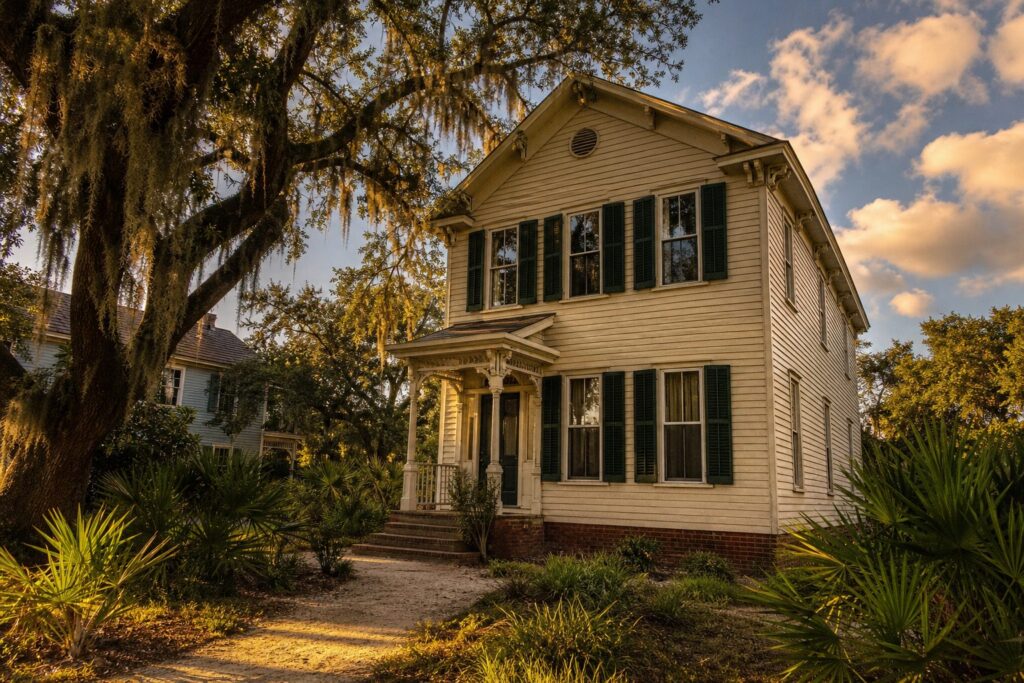
Is buying investment property in Apalachicola FL Historic District worth it in 2026 given the short-term rental regulations and low inventory?
Yes, but only if you buy with realistic carrying-cost expectations, understand that Florida law protects your right to short-term rent, and accept that low inventory means fewer choices but stronger long-term equity protection in this irreplaceable historic market.
Why This Matters Right Now for Apalachicola Investors
I grew up on this coast. My family moved here in 1968, and my father was a realtor in this market before I ever understood what a closing was. So when I tell you that something has shifted in Apalachicola, I’m not reading a trend report; I’m watching it happen from my front porch.
Home prices in Apalachicola over the three months ending June 2026 were down 12.0% compared to the same period last year, selling at a median price of $350K. The average home value sits at $302,329, down 3.8% over the past year. That softening, combined with a seismic shift in U.S. travel patterns redirecting millions toward remote towns and nature escapes, creates a window that serious investors need to evaluate carefully. Homes are also moving faster now, averaging 93 days on market compared to 144 days the prior year.
The question isn’t whether Apalachicola is desirable. It’s whether the math works for you in 2026. Let me walk you through what I see after 13 years and over 300 closed transactions along this stretch of the Forgotten Coast.
What Apalachicola’s Historic District Actually Costs You in 2026
Let’s get specific. You’re not buying in some cookie-cutter subdivision. The average year built for homes in Apalachicola is 1933, and in the Historic Downtown and Waterfront district along Water Street, Commerce Street, and Avenue D, restored antebellum cottages and Victorian-era homes command premiums ranging from $350K to over $600K for renovated properties.
Move deeper into the Residential Interior along the Avenue C through G corridor, and your entry point drops significantly. The median cost of homes in that zone sits around $215,790, well below the national average. Single-family detached homes account for 76% of housing units, and you’ll find Cracker-style cottages with two to three bedrooms in the $185K to $310K range.
Here’s what I tell my clients who are running the numbers: your purchase price is just the beginning. The monthly cost to own a typical Franklin County home runs near $2,372 in principal and interest alone (at today’s 6.52% thirty-year rate), before property tax. Add the average Citizens homeowners premium of roughly $2,575 per year, and your true carrying cost is higher than most inland Florida markets at similar price points. One investor from Nashville I worked with last year came in expecting Panama City Beach economics and had to completely recalibrate once we walked through insurance quotes, flood zone considerations, and the realities of renovating a home built before World War II. After adjusting expectations, he closed on a three-bedroom cottage on Avenue F for under $280K and had it rented within six weeks.
Short-Term Rental Regulations in Apalachicola: What You Can and Cannot Do
This is where most out-of-state investors get tripped up, so let me be direct. Short-term rentals are legal across Florida in 2026. Every whole-unit rental needs a state DBPR vacation rental license and a Department of Revenue account for the 6% sales tax.
Florida’s preemption law, codified in Fla. Stat. 509.032(7)(b), is unambiguous: no Florida city or county can ban vacation rentals, and none of them can tell you how long a guest may stay or how often you may rent. That protection binds every one of Florida’s 67 counties.
But here’s the nuance. Local governments can still regulate:
- Registration and certificates of compliance
- Safety inspections and occupancy limits
- Parking, trash, and noise ordinances
- Signage and advertising standards
- Requiring a 24/7 responsible party
The 2026 regulatory landscape reflects a clear trend: local governments are shifting focus from banning rentals to controlling their operational impact on neighborhoods. If you’re buying in the historic core near Water Street and Battery Park, you need to operate your rental like a good neighbor, not a hotel franchise.
One critical caveat: if a property falls within an HOA or condominium association, those entities hold independent authority to restrict or ban short-term rentals regardless of what the city or state allows. The HOA declaration wins. I always tell my investor clients to pull those covenants before they even schedule a showing.
Why Low Inventory in Apalachicola Actually Protects Your Investment
You might think low inventory is bad news. And yes, it makes finding the right property harder. But here’s the other side of that coin.
The Historic District’s housing stock is finite. You cannot build new Victorian cottages on Water Street. You cannot manufacture the character of the Gibson Inn or the waterfront view from Battery Park. With only a handful of active listings in the city proper at any given time, the scarcity is structural, not cyclical.
Franklin County’s Momentum Market Score reads “frothy” at 21 out of 100, meaning prices are stretched against local incomes. The typical home costs about 6.79 times the local median income, roughly 38% above the Florida norm. That sounds alarming until you realize that your buyer pool isn’t local wage earners; it’s remote workers from Atlanta, Nashville, and the Florida I-4 corridor paying cash for exactly this kind of authenticity.
Long-term forecasts project a continued increase, with the predicted median home price reaching approximately $307,928 by 2031. Apalachicola’s annual appreciation rate of 4.16% has tracked at or slightly above the national average. So while short-term values have softened (creating your entry point), the long-term trajectory remains positive precisely because supply cannot expand meaningfully.
What does that actually mean for your investment thesis? It means you’re buying scarcity in a market that’s being discovered by exactly the demographic willing to pay a premium for it.
The Rental Income Reality: Can Apalachicola Cash Flow?
Let’s talk revenue. Median long-term rent in Apalachicola is $1,600 per month, with rents ranging from $680 to $2,820 depending on location and condition. Two-bedroom rentals run approximately $1,350 per month, significantly below comparable units in Panama City Beach where similar properties start at $1,900.
For short-term rental income, your peak season revolves around summer months and anchor events like the Florida Seafood Festival each November and the Chili and Chowder Cook-Off in January. Between events, the waterfront district’s walkability to Half Shell Dockside at Scipio Creek Marina, the Apalachicola Chocolate and Coffee Company on Market Street, and landmarks like the John Gorrie Museum State Park gives your listing genuine year-round appeal.
A couple from Atlanta I helped last spring purchased a renovated bungalow near Avenue E and 12th Street for $295K. They furnished it thoughtfully, listed it as a vacation rental, and averaged 18 booked nights per month through the first summer. Their gross monthly revenue exceeded $3,200 during peak months, though winter dipped to around $1,800. After accounting for insurance, taxes, management, and maintenance on a 90-year-old home, their year-one cash flow was modest but positive, with substantial equity upside built in.
Here’s the honest truth I share with every investor: if you need day-one cash flow to survive, Apalachicola may not be your market. But if you can absorb seasonal variability and think in five-year horizons, the combination of appreciation and rental income makes a compelling case.
What I’d Tell You Before You Write an Offer in Apalachicola
Having closed over 300 transactions on this coast and earned a 5 out of 5 average rating across 33 client reviews, I’ve watched investors succeed and fail in this market. The difference almost always comes down to preparation, not luck.
- Get your insurance quotes first. Citizens covers 115 homes in Franklin County, and their average premium runs about $2,575 annually. Private market quotes may be higher given coastal exposure.
- Understand historic renovation constraints. The average build year of 1933 means you may face preservation requirements that increase renovation costs and timelines.
- Verify HOA and deed restrictions. State preemption protects your rental rights, but HOA declarations can override that.
- Budget for infrastructure realities. One bridge, one hospital, limited broadband in some areas. These aren’t dealbreakers, but they affect guest experience and property management.
- Think beyond the spreadsheet. This town’s character is its asset. A working waterfront where shrimp boats dock beside galleries, the scent of roasting coffee drifting down Market Street. That’s what guests pay for and what protects your investment from competition.
Frequently Asked Questions About Investing in Apalachicola’s Historic District
Can you legally operate a short-term rental in Apalachicola in 2026?
Yes. Florida state law preempts any city or county from banning vacation rentals or restricting how often or how long you rent. You need a state DBPR vacation rental license and a Department of Revenue tax account. Local regulations may apply to parking, noise, trash, occupancy, and requiring a responsible party, but the rental itself is protected.
What is the median home price in Apalachicola’s Historic District?
The median sale price in Apalachicola as of mid-2026 is $350K. In the historic waterfront district near Water Street and Avenue D, restored homes range from $350K to over $600K. The broader residential interior along Avenues C through G offers entry points around $215,790.
How much does homeowners insurance cost in Franklin County?
The average Citizens premium in Franklin County runs approximately $2,575 per year. Citizens is Florida’s state-backed insurer of last resort, and 115 homes in the county carry their policies, which signals that private insurers have pulled back from the area.
Is Apalachicola’s housing market appreciating or declining?
Short-term values have softened, with home values down 3.8% over the past year. However, the annual appreciation rate of 4.16% remains at or above the national average over a longer horizon, and forecasts project a median price of approximately $307,928 by 2031.
What kind of rental income can you expect in Apalachicola?
Median long-term rent is $1,600 per month. Short-term vacation rental income varies seasonally, with peak summer months and event weekends (Florida Seafood Festival, Chili and Chowder Cook-Off) generating substantially higher nightly rates than winter months.
Are there HOA restrictions on short-term rentals in Apalachicola?
Yes, this is critical. While state law prevents cities and counties from banning vacation rentals, HOA and condominium associations hold independent authority to restrict or ban them. Always review the declaration of covenants before purchasing any property you intend to rent short-term.
How long do homes sit on the market in Apalachicola?
Homes in Apalachicola currently average 93 days on market, down from 144 days the prior year. This faster pace suggests increasing buyer interest even as prices have softened.
What are the carrying costs for an investment property in Apalachicola?
At current mortgage rates of approximately 6.52%, the monthly principal and interest on a typical Franklin County home runs near $2,372 before property taxes. Add insurance (approximately $215 per month on average through Citizens) plus maintenance on older historic homes, and total monthly carrying costs can be substantial.
Does Apalachicola have new construction that could increase competition?
In 2025, builders pulled permits for 112 new homes in Franklin County, all single-family. At 9.0 permits per 1,000 residents, new supply is above the Florida pace. However, new construction in the historic district itself is extremely limited due to preservation requirements and lot scarcity.
What makes Apalachicola different from other Florida Gulf Coast investment markets?
Apalachicola is a working port town with a population of about 2,231, sitting where the Apalachicola River meets the Gulf. Its authenticity, including a working waterfront with shrimp boats and oyster businesses alongside restored historic buildings, cannot be replicated. Infrastructure limitations like one bridge and one hospital act as natural growth filters that protect the town’s character and property values.
The Bottom Line on Investing in Apalachicola’s Historic District
Buying investment property in Apalachicola’s Historic District in 2026 is worth it for the right investor: someone with a five-year or longer horizon, realistic expectations about seasonal cash flow, and genuine appreciation for what makes this place irreplaceable. The current price softening gives you an entry point that didn’t exist 18 months ago. Florida law protects your right to short-term rent. And the structural scarcity of historic inventory along Water Street, Battery Park, and the Avenue corridors means you’re buying something that cannot be built again.
If you’re serious about evaluating a specific property in Apalachicola or the surrounding Forgotten Coast including St. George Island real estate, I’d love to have an honest conversation about what the numbers actually look like for your situation. I’m Melissa Chandler with Melissa Chandler Real Estate, based at 140 W 1st Street on St. George Island. You can reach me at 850-653-7893. I’d rather give you a straight answer than make a sale.