What Rising Rates Mean for St. George Island Buyers in 2026
October 23, 2026 by Melissa Chandler
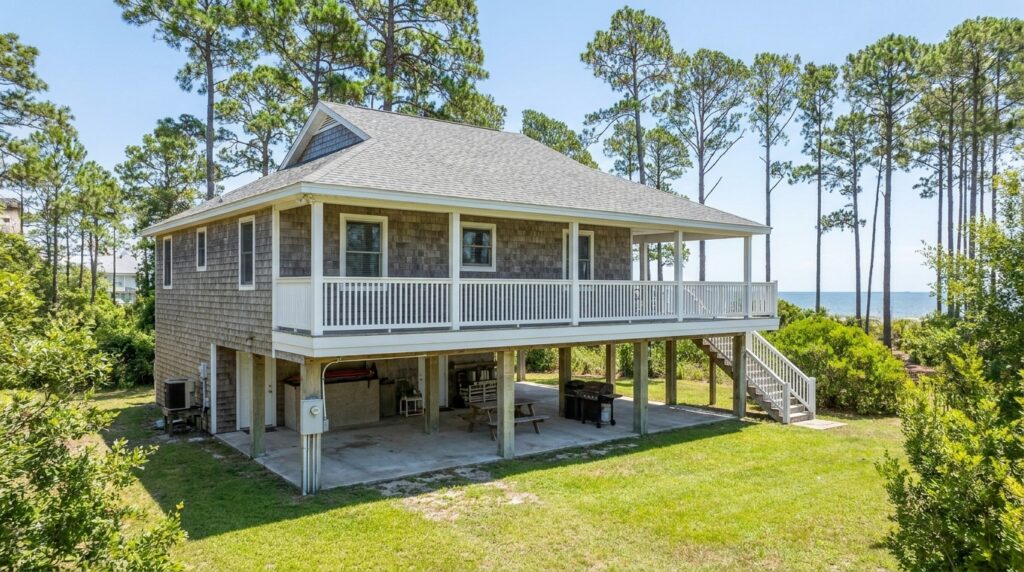
What do rising mortgage rates mean for buyers looking at homes for sale in St. George Island?
Rising rates increase your monthly carrying costs and compress investment returns, but St. George Island’s strong vacation rental income and limited barrier-island supply create a market where strategic buyers can still find compelling opportunities, especially with today’s increased negotiating power.
Why This Matters Right Now for St. George Island Buyers
I grew up on this coast. My family moved to St. George Island in 1968, and I’ve watched this market through every cycle imaginable. What I can tell you is that the rate conversation today is very different from the rate conversation even two years ago, and it’s especially different on a barrier island where supply is genuinely finite.
As of late April 2026, Freddie Mac reported the 30-year fixed mortgage rate at 6.23%, down from 6.81% one year earlier, per Zachos Realty’s Gulf Coast Market Report. That improvement matters, but rates remain well above the sub-3% environment of 2020 and 2021. For investors and second-home buyers eyeing St. George Island real estate, this shift directly affects your monthly payment, your cash-on-cash return, and how aggressively you can negotiate. Fannie Mae projects mortgage rates settling in the 5.8% to 6.2% range through the remainder of 2026, so planning around this level is prudent.
The question isn’t whether rates are high. They are. The question is whether the math still works on a 28-mile barrier island with documented rental income north of $100,000 per year. Let me walk you through what the numbers actually look like.
How St. George Island Home Prices Are Performing Despite Higher Rates
Here’s what might surprise you: St. George Island prices have not softened despite elevated borrowing costs. Homes in St. George Island sold for a median price of $1,200,000 in July 2026, per local MLS data. The median sale price is up 13.8% since last year, and the median sale price per square foot is $619, up 24.5% year-over-year.
Why the resilience? St. George Island’s buyer pool skews heavily toward cash buyers and high-net-worth individuals who are less sensitive to interest rate fluctuations. When you’re purchasing a home on The Plantation or along Canopy Lane in The Bluffs, there’s a good chance you’re not financing 80% of the purchase price. That insulates this market from the rate-driven pullback happening in more conventional neighborhoods across Florida.
But the pace has slowed. Properties now stay on the market an average of 134 days, compared to 122 days last year. Homes sell for about 6% below list price on average and go pending in around 121 days. That slower pace is your leverage as a buyer. Having closed over 300 transactions in this market over 13 years, I can tell you that kind of gap between asking price and sale price creates real room for negotiation, especially when you come to the table with strong financing or cash.
Across the broader Franklin County market, only about 18% of listings have cut their price, which is notably lower than the Florida average of 24.5%, per local market data. Sellers on the Forgotten Coast are holding firmer than in many other parts of the state, but they are still making concessions that were unheard of two years ago.
What Higher Rates Actually Cost You on a St. George Island Investment
So what does the math look like in practice? Let me break it down in a way that’s useful.
At a 6.5% rate on a $900,000 St. George Island investment property with 25% down (a $675,000 loan), your monthly principal and interest payment comes to roughly $4,267. At the 2021 rate of approximately 3%, that same loan would have cost around $2,846 per month. That difference of about $1,421 per month, or roughly $17,052 per year, comes straight out of your cash flow.
Now add in the realities of coastal ownership. The average Citizens homeowners premium runs about $215 per month, per BrightFloridaHomes data. Barrier island properties typically fall toward the higher end of insurance cost ranges, so you should budget accordingly. Owning the typical home in Franklin County at today’s 6.52% 30-year rate takes about 41.3% of median income in principal and interest alone, per local market analysis.
For investors, this means you need your rental income to work harder. And on St. George Island, it often does. Active MLS listings show properties generating $100,000 to $126,000 or more in annual gross rental income, per Port Realty Group data. One Plantation property has a projected 2026 income of $100,000. Another property has generated $126,000 in gross income so far in 2026. Those are strong numbers, even against elevated financing costs.
Where the Negotiating Opportunity Is on St. George Island
Here’s what I tell my clients who are weighing whether to wait for lower rates or act now: you’re looking at a market where buyer leverage exists for the first time since before the pandemic.
Multiple offers are rare on St. George Island today. In Gulf Coast and Panhandle markets broadly, sellers are contributing to closing costs and accepting price reductions that were uncommon two years ago, according to resources on preparing for homeownership. Florida as a whole has shifted toward buyers, with roughly 5 months of single-family home supply and homes averaging 70 to 74 days on market statewide.
On St. George Island specifically, you have 113 properties listed as of August 30, 2026, with an average of 155 days on market, per Port Realty Group data. That’s meaningful sitting time for sellers, and it translates to flexibility at the negotiation table.
The Gulf Beaches corridor along E. Pine Avenue offers entry-level island homes, with properties listed starting around $625,000 for a three-bedroom. Bayside Drive brings mid-tier bay-view homes in the $1,250,000 range. The Bluffs and Turtle Beach Village represent the top of the market, with listings reaching $2,195,000 to $3,195,000. The range means there’s a price point for almost every serious investor, even in a higher-rate environment.
What I’ve seen over my 13 years in this market, and as a top 6% Berkshire Hathaway HomeServices agent nationwide, is that the buyers who win in these transition periods are the ones who focus on the total cost of the deal, not just the rate. A seller concession on closing costs or a purchase price $40,000 below asking can offset years of slightly higher interest payments.
Should You Wait for St. George Island Rates to Drop Further?
This is the question I hear most often. And I understand the instinct to wait. But consider what waiting actually costs you on a barrier island with limited inventory.
Franklin County saw only 59 homes available at the end of August 2026, down from 72 the year before, per the KOFO.com Franklin County Housing Report from September 14, 2026. Home sales through August totaled 211, compared to 227 last year. The median sales price of those homes rose over 8%, from $235,000 to over $254,000. The average sale price climbed from $256,000 to over $284,000 during the same period.
If rates ease to the 5.8% range that Fannie Mae projects, you could see more buyers re-enter this market, and the negotiating leverage you currently enjoy could evaporate. That 6% discount off list price you can negotiate today might shrink to 2% or disappear entirely.
There’s a reason people in this industry say you date the rate and marry the property. On St. George Island, where the average sale price has risen 89% over the past 10 years (from about $150,000 in 2016 to $284,000 county-wide today, per the KOFO.com Housing Report), the long-term appreciation trend favors owners. A half-point reduction in rate saves hundreds of dollars per month on a typical Gulf Coast loan amount, meaning a refinance opportunity is a realistic part of your long-term plan.
How St. George Island Vacation Rental Income Offsets Rate Pressure
For investors specifically, the vacation rental income story is what makes St. George Island work in a higher-rate environment. Peak rental season runs from March through September, with the strongest weeks in June through August. Shoulder seasons are increasingly strong. Professional vacation rental management companies on the island typically charge 20% to 30% of gross rental income.
When you compare the documented income potential of $100,000 to $126,000 or more per year against your carrying costs, the numbers can still pencil. That’s true even with rates in the low 6% range. It’s just tighter than it was three years ago, which means property selection and pricing discipline matter more than ever.
With 33 five-star reviews from past clients, rated 5 out of 5, I’ve helped investors navigate this exact analysis hundreds of times. The key is matching the right property to your return expectations, and being honest about what the numbers say.
Frequently Asked Questions
Are St. George Island home prices going up or down in 2026?
The median sale price in St. George Island was $1,200,000 in July 2026, up 13.8% year-over-year, per local MLS data. Prices have risen despite higher mortgage rates, driven largely by limited barrier-island supply and a buyer pool that skews toward cash purchases and high-net-worth individuals.
What are current mortgage rates for St. George Island investment properties?
As of late April 2026, Freddie Mac reported the 30-year fixed rate at 6.23%, per the Zachos Realty Gulf Coast Market Report. Investment property loans typically carry a 0.5% to 0.75% premium above primary residence rates. DSCR loans, which underwrite based on property income, are increasingly popular among vacation rental investors.
How much rental income can a St. George Island property generate?
Active MLS listings disclose gross rental income ranging from $100,000 to $126,000 or more per year for well-positioned, fully furnished vacation rental properties, per Port Realty Group data. Actual income depends on location, size, furnishing quality, and management.
How long are homes sitting on the market on St. George Island?
Properties average 134 days on market as of mid-2026, up from 122 days last year, per local MLS data. Homes sell for about 6% below list price on average. This pace gives you meaningful negotiating leverage.
Is now a good time to buy on St. George Island with higher rates?
The combination of slower sales pace, seller flexibility, and strong rental income potential creates a window that favors prepared buyers. With Fannie Mae projecting rates settling between 5.8% and 6.2% through 2026, a future refinance could improve your returns after you’ve locked in today’s price.
What neighborhoods on St. George Island are best for investors?
Gulf Beaches (Units 1 through 5, centered on E. and W. Pine Avenue) offers the most rental-income-focused properties and proximity to the commercial district on Franklin Boulevard. The Plantation on the east end commands premium pricing but also attracts higher-end renters.
How much does homeowners insurance cost on St. George Island?
The average Citizens homeowners premium is about $215 per month, per BrightFloridaHomes data. Barrier island properties often fall at the higher end of cost ranges. You should budget accordingly and factor insurance into your cash flow projections.
What is the inventory situation in Franklin County right now?
As of the end of August 2026, there were 59 homes available in Franklin County, down from 72 the year before, per the KOFO.com Franklin County Housing Report from September 14, 2026. Tighter inventory supports pricing but also means fewer choices for buyers.
Can cash buyers get better deals on St. George Island?
Cash buyers hold a significant advantage in this market. You can close faster, eliminate financing contingencies, and negotiate more aggressively. In a vacation rental market where every week of vacancy costs real money, speed to close matters.
What is the long-term appreciation trend for St. George Island real estate?
The average sale price in Franklin County has risen 89% over the past 10 years, climbing from about $150,000 in 2016 to over $284,000 today, per the KOFO.com Housing Report from September 14, 2026. St. George Island’s barrier-island scarcity supports continued long-term demand.
The Bottom Line
Rising rates have changed the math on St. George Island, but they haven’t changed the fundamentals. You’re looking at a 28-mile barrier island with finite supply, documented vacation rental income exceeding $100,000 per year on strong properties, and a negotiating environment that hasn’t favored buyers this much since before the pandemic. The sellers are flexible. The inventory is tight but accessible. And the long-term appreciation trend on this coast speaks for itself.
I’ve been on this island since 1968. I’ve watched it grow from a handful of families to a sought-after destination. If you’re thinking about investing in St. George Island real estate, or if you’re exploring homes for sale in St. George Island and want someone who will give you an honest read on whether the numbers work, I’d welcome that conversation. Call me at 850-653-7893 or visit my office at 140 W 1st Street on St. George Island. I’d rather have an honest conversation than make a sale, and that’s been true my entire career.
*Melissa Chandler, Realtor, Melissa Chandler Real Estate. License #3280547. All market data referenced from sources cited within this article. Real estate decisions should be made with the guidance of qualified professionals familiar with your specific financial situation.*