Conservation Land Restrictions Near Apalachicola’s Estuarine Reserve and Your Second Home in 2026
October 1, 2026 by Melissa Chandler
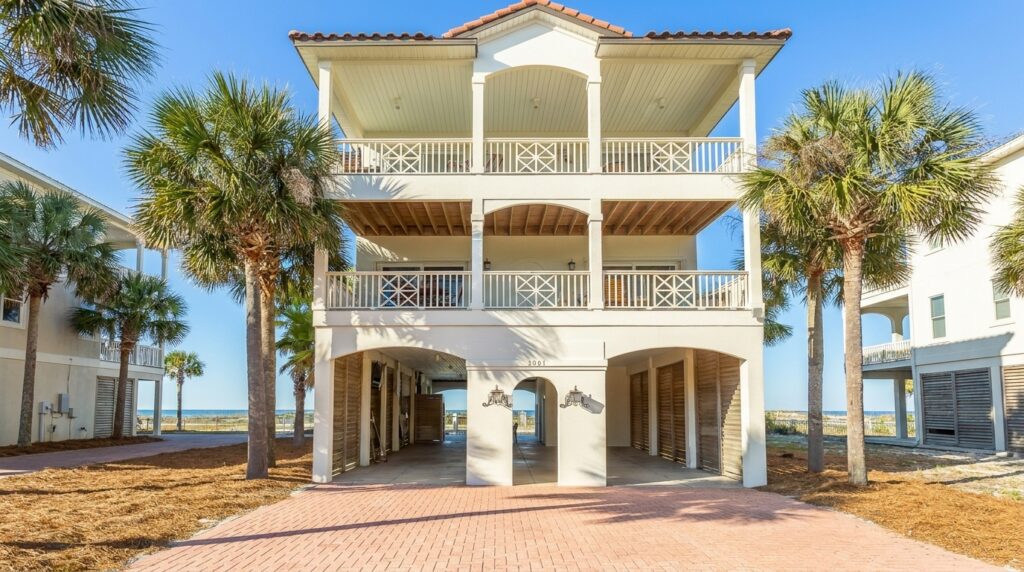
What are the conservation land restrictions near the Apalachicola National Estuarine Research Reserve, and how do they affect what you can build or modify on a second home property in 2026?
If you are buying a second home near Apalachicola’s 246,766-acre National Estuarine Research Reserve, you will face multiple layers of conservation restrictions, from five-acre minimum lot sizes and 10% maximum impervious surface limits to critical shoreline setbacks and state-level land use review, all of which directly shape what you can build, expand, or modify on your property.
Why Apalachicola’s Conservation Landscape Matters Right Now
Apalachicola sits at the edge of one of the most biologically diverse estuarine systems in North America, and that distinction comes with real consequences for anyone planning to build or renovate. The Apalachicola National Estuarine Research Reserve (ANERR) encompasses 246,766 acres of protected lands and waters across Franklin, Gulf, and Calhoun counties, according to the Reserve’s NOAA-approved management plan revised in 2024. The Reserve also holds UNESCO Biosphere Reserve status, an international designation meant to demonstrate a balanced relationship between people and nature.
I have spent my entire life on this coast. My family moved here in 1968, and I grew up watching my father navigate the real estate landscape before I ever understood what a closing was. Over 13 years as a Realtor and more than 300 closed transactions, I have learned that the single biggest surprise for second-home buyers in this market is not the price of the home; it is what they can and cannot do with the land around it. If you are an eco-conscious buyer drawn to Apalachicola’s pristine character, you need to understand these restrictions before you write an offer.
How the Area of Critical State Concern Designation Affects Your Apalachicola Property
Here is the detail that catches most buyers off guard: while the broader Area of Critical State Concern (ACSC) designation was removed from the rest of Franklin County by 2011, the city of Apalachicola itself still carries that heightened state-level oversight. Per the Florida Department of Commerce guidelines, this means any land use change, development order, or comprehensive plan amendment within the city must be reviewed and approved at the state level, not just by local permitting offices.
What does that actually mean if you want to add a screened porch, build a guest cottage, or convert a ground-floor storage area into livable space? It means your project likely triggers an additional layer of review beyond the standard city or county process. Timelines stretch. The bar for approval is higher. And proposals that might sail through permitting in neighboring Eastpoint or Carrabelle can stall in Apalachicola.
If you are looking at properties within Apalachicola’s historic downtown core, along Water Street or in the North Side Historic District near Chestnut Street, this ACSC layer is something you will encounter directly. Properties in the surrounding unincorporated areas of Franklin County do not carry this same state-level scrutiny, but they come with their own zoning restrictions that I will break down next.
Franklin County Zoning Districts That Shape What You Can Build Near Apalachicola
Franklin County’s zoning ordinance establishes several conservation-oriented districts near the Reserve, and each one puts strict limits on density, lot coverage, and building type. You need to know exactly which district your target property falls in before you plan any construction.
Forestry Conservation District (A1)
Activities in this district must conform to US Forestry Service Standards. Both the Critical Shoreline Ordinance (89-8) and Flood Hazard Ordinance (88-2) apply here. The maximum impervious lot coverage is just 10%, per the Franklin County zoning code. That means if you have a one-acre lot, only about 4,356 square feet of that acre can be covered by structures, driveways, or any hardscape.
Forestry Agricultural District (A2)
This district allows only one dwelling unit per approximately 40 acres, with a minimum lot width and depth of 200 feet each, according to county zoning classifications. The residential portion must be at least one acre, the maximum building height is 47 feet, and impervious lot coverage is again capped at 10%.
Single Family Estate Residential (R3)
The R3 district requires a minimum of one single-family dwelling per five acres, with the five-acre tract having a minimum depth and width of 200 feet, per the Franklin County zoning ordinance. Clustering of dwelling units is allowed, but only at a maximum density of one single-family dwelling per acre, and only when compliant with the county’s subdivision ordinance.
So what does this mean in practical terms? If you are dreaming of a compound-style second home with a main house and a detached guest house on a small lot, the math may not work in these zones. With 13 years of experience and over 300 transactions closed in this coastal market, I can tell you that the conversation about zoning needs to happen before you fall in love with a piece of property, not after.
Critical Shoreline Setbacks, Fill Restrictions, and Flood Rules in Apalachicola
Beyond zoning, Franklin County enforces two ordinances that directly control what happens on your lot near the water.
- Critical Shoreline Ordinance (89-8): This ordinance imposes setback requirements from the shoreline. Structures typically must sit at least 75 feet from the mean high water line. If your dream is a second home perched right at the water’s edge, you need to understand that this setback can significantly reduce your buildable footprint.
- Flood Hazard Ordinance (88-2): Structures in flood zones must meet elevation requirements. And here is the restriction that surprises the most buyers: fill is not permitted on residential lots except for the house pad itself. You cannot fill your lot to raise its elevation, per the county ordinance. This means the natural grade of your land dictates your building approach.
For eco-conscious buyers, these rules are actually a feature, not a bug. They protect the very character of the Apalachicola waterfront that attracted you in the first place. But they do require thoughtful design and planning. What I tell my clients is that working with a local architect and contractor who understands these constraints from the start will save you months of frustration and potentially tens of thousands of dollars in redesign costs.
Septic System Changes Effective July 2026 and What They Mean for Apalachicola Second Homes
If you are purchasing a second home near the Reserve in 2026, you need to be aware of a significant regulatory change. Franklin County has issued a notice regarding HB 589, which changes septic system permit requirements for single-family homes, effective July 1, 2026, according to the county’s published guidance.
Many properties near the Reserve lack municipal sewer connections, which means you are likely dealing with a septic system. Near an estuarine environment this sensitive, advanced septic systems are often required to protect water quality. Before you close on any property, you should:
- Check with the local water and sewer department to confirm whether municipal service is available at your specific address
- Contact the Franklin County Health Department for well and septic permitting requirements if it is not
- Budget for the cost of an advanced septic system if new construction or significant renovation is part of your plan
This is particularly relevant in Apalachicola’s Westside and Mainland residential areas, where lots tend to be larger but infrastructure may be more limited than in the walkable historic downtown core near Market Street and Commerce Street.
How the ANERR Management Plan Influences Development on Adjacent Private Land
The Reserve’s revised management plan, approved by NOAA in 2024 (replacing the 2015 plan), specifically addresses coastal development as one of its core management issues. According to the Federal Register notice for the revised plan, stewardship of the Reserve is accomplished by actively managing resources the Reserve is directly responsible for, and by influencing the activities of others within and adjacent to Reserve-managed areas.
What that means for you as a private property owner: even if your lot is not technically within Reserve boundaries, the multi-agency management structure (which includes the U.S. Fish and Wildlife Service, Florida Fish and Wildlife Conservation Commission, Florida Park Service, and the Northwest Florida Water Management District) can influence permitting decisions that affect your project. The Reserve holds a seat at the table when development proposals near its boundaries are being evaluated.
The ANERR also maintains demonstration areas showcasing xeric gardening, butterfly gardening, and green building practices, according to Reserve materials. If you are an eco-conscious buyer, these can serve as excellent design inspiration for landscaping and construction approaches that align with both the regulatory environment and your personal values.
What Apalachicola’s Market Looks Like for Second-Home Buyers in 2026
Understanding the restrictions is essential, but so is understanding the opportunity. Apalachicola’s median home price was approximately $293,301 as of June 2026, per WalletInvestor data, and the median sold price jumped from $266,100 to $307,800 between April 2025 and March 2026, a 15.67% increase, according to RealtyTrac market data. The market scores just 6 out of 100 on competitiveness, meaning buyers have real leverage and negotiating room.
With 136 homes currently listed in the 32320 zip code (per RealtyTrac) and an average days on market of 160, you are not in a bidding war. You have time to do your due diligence on zoning, conservation overlays, and permitting before committing. The effective property tax rate in Franklin County is approximately 0.82% as of Q1 2026, which keeps your carrying costs modest compared to other coastal Florida markets.
Rated 5 out of 5 stars by 33 past clients, I know this market at a level that comes from growing up on this coast. When you are weighing a second-home purchase near the Reserve, the value of working with someone who can walk you through zoning maps, ACSC review requirements, and septic regulations before closing cannot be overstated.
Frequently Asked Questions
Can I build a new single-family home on vacant land near the Apalachicola Reserve in 2026?
Yes, in most cases, but your options depend heavily on which zoning district the land falls in. In the R3 district, you need a minimum of five acres for one dwelling unit. In the A2 district, you may need approximately 40 acres per dwelling, per the Franklin County zoning code. Impervious lot coverage is capped at 10% in conservation-adjacent zones.
Does the city of Apalachicola have different building restrictions than unincorporated Franklin County?
Yes. The city of Apalachicola still carries an Area of Critical State Concern designation, which means land use changes and development orders require state-level review through the Florida Department of Commerce, adding time and an extra approval layer beyond standard local permitting.
Can I add fill to raise the elevation of my lot near Apalachicola?
No. Per the Franklin County ordinance, fill is not permitted on residential lots except for the house pad itself. You cannot fill to elevate your entire lot, which means building design must accommodate natural grade conditions.
How far from the water do I have to build near Apalachicola Bay?
The Critical Shoreline Ordinance (Franklin County Ordinance 89-8) typically requires structures to be set back at least 75 feet from the mean high water line. This setback can significantly reduce the buildable footprint on waterfront lots.
What changed about septic system rules in Franklin County in 2026?
Franklin County issued a notice regarding HB 589, which changed septic system permit requirements for single-family homes effective July 1, 2026. Properties without municipal sewer access, common near the Reserve, may require advanced septic systems to protect estuarine water quality.
Does the ANERR have authority over my private property near its boundaries?
The Reserve does not directly regulate private land. However, according to its 2024 NOAA-approved management plan, stewardship includes influencing the activities of others within and adjacent to Reserve-managed areas. Multiple agencies collaborate on permitting decisions near Reserve boundaries.
What is the maximum amount of my lot I can cover with structures near the Reserve?
In the A1 Forestry Conservation and A2 Forestry Agricultural zoning districts, maximum impervious lot coverage is 10%, per the Franklin County zoning code. This includes all structures, driveways, patios, and hardscape.
Can I install solar panels or rainwater harvesting on my second home in Apalachicola?
Florida law generally protects homeowners’ rights to install solar panels, and the ANERR actively promotes green building practices at its demonstration sites. However, within Apalachicola’s historic districts, exterior modifications may require additional review. Check with the city before installing any visible systems.
How many agencies oversee the Reserve, and why does that matter for my project?
At least five agencies manage lands within the ANERR: U.S. Fish and Wildlife Service, Florida Fish and Wildlife Conservation Commission, Florida Park Service, Northwest Florida Water Management District, and DEP’s Office of Resilience and Coastal Protection. Your project may need clearance from multiple agencies depending on its location and scope.
Is it worth buying a second home in Apalachicola despite all these restrictions?
That depends on what you value. These conservation layers are precisely what protect the pristine environment, low density, and ecological richness that make Apalachicola unlike anywhere else on the Florida coast. For eco-conscious buyers, the restrictions are a long-term investment in preserving the very qualities that drew you here.
The Bottom Line
Buying a second home near Apalachicola’s National Estuarine Research Reserve in 2026 means navigating a layered system of conservation restrictions, from ACSC state-level review within the city limits to strict zoning minimums, 10% impervious surface caps, shoreline setbacks, fill prohibitions, and updated septic regulations. None of these are deal breakers, but every one of them needs to be part of your planning before you close.
I have been part of this coastal community since 1968, and I have worked as a Realtor here for over 13 years with more than 300 transactions behind me. If you are considering a second home on the Forgotten Coast and want someone who will have an honest conversation about what you can and cannot do with a property, give me a call at 850-653-7893. I am Melissa Chandler with Melissa Chandler Real Estate on St. George Island, and this coast is not just where I work. It is home.