Property Tax Implications of Buying a Short-Term Rental in Apalachicola FL
September 24, 2026 by Melissa Chandler
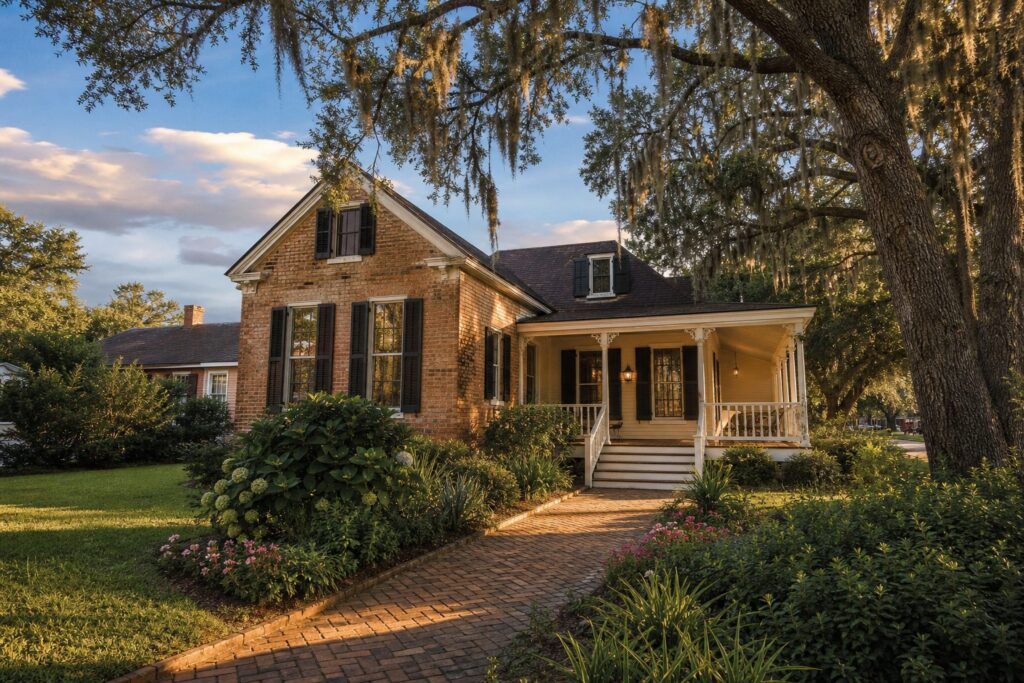
What are the property tax implications of buying a short-term rental investment property in Apalachicola, FL in 2026, and how does homestead exemption affect your returns?
A dedicated short-term rental in Apalachicola will not qualify for Florida’s $51,411 homestead exemption, meaning you pay property taxes on the full assessed value with no Save Our Homes cap, plus you owe multiple layers of transactional taxes on every booking.
Why This Matters Right Now for Franklin County Investors
If you are shopping for an investment property along the Forgotten Coast in 2026, property taxes are not just another line item on your pro forma. They are the single most misunderstood expense I see investors stumble over. Having closed over 300 transactions in this market during my 13-plus years as a Realtor in Franklin County, I can tell you that the gap between what a homesteaded owner pays and what you will pay as a short-term rental investor can make or break your annual return.
Apalachicola currently carries a median effective property tax rate of approximately 0.74%, which is the lowest within Franklin County and well below the national median of 1.02%. That sounds fantastic on paper. But that median includes homesteaded properties with their exemptions baked in. When you strip those benefits away, as you must for a dedicated vacation rental, your effective rate climbs closer to 1.0% to 1.2%. Understanding this distinction before you write an offer is the difference between a deal that pencils and one that drains your reserves.
How Apalachicola Property Taxes Work Without Homestead Exemption
Let me walk you through the mechanics so there are no surprises at closing or when your first tax bill arrives.
Florida property taxes are calculated using millage rates. One mill equals $1 in taxes for every $1,000 of taxable value. The Franklin County Property Appraiser assesses your property, and the resulting assessed value, minus any applicable exemptions, is multiplied by the combined millage rate from the county, school board, and special districts.
Here is where it gets important for you as an investor. Florida’s homestead exemption removes up to $51,411 from your property’s assessed value in 2026. On a $350,000 home, that exemption alone could save you roughly $500 to $1,000 or more per year depending on the applicable millage rate. But the exemption applies only to your permanent, primary residence. A property you are renting to vacationers on a weekly basis simply does not qualify.
What does that look like in real dollars? Consider these two scenarios on the same $350,000 Apalachicola property:
- Homesteaded owner: Estimated annual property tax of roughly $2,200 to $2,600, with the Save Our Homes cap limiting annual assessed value increases to 3% or the Consumer Price Index, whichever is lower
- STR investor (no homestead): Estimated annual property tax of roughly $3,500 to $4,200, with no cap on annual assessed value increases
That $1,000 to $1,600 annual difference comes straight out of your net operating income. One investor I worked with last year purchased a charming cottage near downtown Apalachicola, fully expecting a modest tax bill based on the prior owner’s records. What she did not realize was that the prior owner had been homesteaded for over a decade, with years of capped assessments holding her taxable value far below market. At closing, the assessment reset to current market value, and the new tax bill was nearly double what the seller had been paying. I always tell my clients to run their numbers using the post-purchase, non-homesteaded tax estimate, never the seller’s old bill.
The Save Our Homes Cap Reset That Catches Apalachicola Buyers Off Guard
This is the detail that trips up even seasoned investors. Florida’s Save Our Homes amendment limits annual increases in assessed value to 3% or the change in CPI, whichever is lower, but only for homesteaded properties. When a property changes ownership, that cap resets entirely. The new assessed value jumps to current market value regardless of what the previous owner was paying.
So if you are buying a home in Franklin County that has been homesteaded by the same family for 15 years, you could see an assessed value that is significantly higher than what appears on the most recent tax record. I have seen this surprise more investors in this market than almost any other issue. Always request the current just-value estimate from the Franklin County Property Appraiser’s office before finalizing your offer, not just the most recent tax bill.
The Three Tax Layers on Your Apalachicola Short-Term Rental Income
Property taxes are only one piece of the puzzle. When you operate a short-term rental in Franklin County, you face three distinct tax obligations on your rental income:
- Florida State Sales Tax (6%): You must collect and remit this on every booking of six months or less. There are no exceptions for small operators or part-time hosts.
- Franklin County Tourist Development Tax (TDT): This is the local “bed tax” that funds tourism promotion and infrastructure. You are required to collect this from your guests and remit it to the Franklin County Tax Collector.
- County Discretionary Sales Surtax: Verify the current rate using the Florida Department of Revenue’s 2026 schedule, as this can change year to year.
When you add these together, your guests are paying roughly 8% to 12% on top of your nightly rate. While technically this is a pass-through tax collected from guests, it affects your pricing competitiveness and ultimately your occupancy rates. What I tell my clients is to build these taxes into their revenue projections from day one, because pricing a rental without accounting for the total guest cost leads to unrealistic income expectations.
Licensing, Insurance, and Regulatory Requirements in Franklin County
Before you accept a single booking in Apalachicola, you need to check several boxes:
- DBPR Vacation Rental License: Every vacation rental in Florida must be licensed through the Department of Business and Professional Regulation. This is non-negotiable. The state defines any property rented for fewer than 30 days, more than three times per year, as a vacation rental requiring this license.
- Florida Department of Revenue Registration: You must register separately for tax collection purposes to remit sales tax and the tourist development tax.
- Specialized Insurance: Standard homeowners insurance policies typically exclude short-term rental activity. You will need a specialized vacation rental policy, which adds to your annual carrying costs.
- HOA Restrictions: If you are considering a property within a homeowners association in the Apalachicola or St George Island area, be aware that HOA covenants can independently restrict or ban short-term rentals, even if the county and state allow them. State preemption does not override private covenants.
On the regulatory front, the existing framework is relatively stable heading into late 2026. The proposed statewide preemption bill, Senate Bill 280, was vetoed in June 2024, and no replacement legislation has passed. Franklin County remains investor-friendly for vacation rentals under current rules, but I always encourage my clients to stay informed, because the legislative landscape in Florida can shift quickly.
Can You Keep Homestead Exemption If You Rent Occasionally in Apalachicola?
This is one of the most common questions I get from property owners who are thinking about dipping their toes into the vacation rental market. The short answer is yes, technically, but the threshold is so narrow that it is essentially incompatible with running a profitable STR business.
Florida law allows you to retain homestead exemption only if you rent your primary residence for fewer than 30 days per year and not for two consecutive calendar years. If you exceed either limit, you risk losing the exemption entirely, and the property appraiser can retroactively reassess your property and send you a bill for the difference.
One couple I worked with on St George Island wanted to rent their home for just a few peak-season weeks to offset hurricane insurance costs. Even that modest plan put them right at the edge of the 30-day limit once you factored in cleaning days and turnover gaps. We walked through the math together, and they ultimately decided the risk of losing their homestead protection, including the creditor protection and the Save Our Homes cap, was not worth the rental income from a handful of weeks.
Frequently Asked Questions
Does a short-term rental in Apalachicola qualify for Florida homestead exemption?
No. The Florida homestead exemption is reserved exclusively for your permanent, primary residence. If you purchase a property in Apalachicola specifically for short-term rental use, it will be assessed at full market value with no exemption applied. This increases your annual property tax burden compared to a homesteaded property at the same value.
What is the effective property tax rate in Apalachicola in 2026?
The median effective property tax rate in Apalachicola is approximately 0.74%, which is the lowest in Franklin County and well below Florida’s statewide median of 1.10%. However, this median includes homesteaded properties. Without the exemption, your effective rate will be higher, likely in the range of 1.0% to 1.2%.
How much is the Florida homestead exemption worth in 2026?
The Florida homestead exemption removes up to $51,411 from your property’s assessed value in 2026. The first $25,000 is fully exempt from all property taxes. The remaining $26,411 applies to the assessed value between $50,000 and $75,000 and does not include school district taxes.
What happens to property taxes when I buy a previously homesteaded property?
The Save Our Homes assessment cap resets when ownership changes. If the prior owner was homesteaded for years with capped assessments, your new assessed value will jump to current market value. This can result in a significantly higher tax bill than what the seller was paying, sometimes double or more.
What taxes do I collect from guests on my Franklin County vacation rental?
You must collect and remit three taxes: the 6% Florida state sales tax, the Franklin County Tourist Development Tax, and any applicable county discretionary sales surtax. Together these add roughly 8% to 12% to the guest’s total cost. Verify current rates with the Florida Department of Revenue and the Franklin County Tax Collector.
Do I need a license to operate a vacation rental in Apalachicola?
Yes. Florida requires a DBPR vacation rental license for any property rented for fewer than 30 days more than three times per year. You must also register with the Florida Department of Revenue for tax collection purposes before accepting your first booking.
Can my HOA block short-term rentals even if the county allows them?
Absolutely. HOA and condominium association governing documents can independently prohibit or restrict short-term rentals. Florida’s state preemption of local STR regulations does not apply to private community associations. Always review the declaration of covenants before purchasing.
What is the median property tax bill in Franklin County?
The median annual property tax bill in Franklin County is approximately $2,305. This figure reflects the mix of homesteaded and non-homesteaded properties across the county’s 8,288 total properties, which carry a cumulative value of approximately $2.1 billion.
Is there a discount for paying property taxes early in Franklin County?
Yes. Florida property tax bills are issued November 1 each year, and you receive a 4% discount if you pay during November. This is a meaningful cash flow consideration, especially if you are managing multiple investment properties in the Apalachicola or St George Island area.
Has Florida passed new short-term rental legislation in 2026?
No significant new vacation rental legislation has passed through September 2026. The 2024 preemption bill, SB 280, was vetoed, the 2025 session produced no vacation rental bill, and the only 2026 measure to advance, SB 608, died in the House. The existing regulatory framework remains in place.
The Bottom Line
Buying a short-term rental investment property in Apalachicola can absolutely be a strong financial move. The base tax rate is among the lowest you will find on the Florida coast, and the demand for vacation rentals along the Forgotten Coast continues to draw visitors year-round. But you have to go in with clear eyes about what it actually costs. No homestead exemption, no assessment cap, and multiple layers of transactional taxes on every booking all eat into your returns in ways that a back-of-the-napkin analysis will miss.
I have been helping investors navigate exactly these decisions in Franklin County for over 13 years, with 300 plus closed transactions and 33 five-star reviews from clients who trusted me with their biggest financial decisions. If you are considering a short-term rental investment in Apalachicola, St George Island, or anywhere along the Forgotten Coast, I would love to have an honest conversation about whether the numbers work for your specific goals. Reach out to me, Melissa Chandler, at 850-653-7893. Let’s make sure you walk into this investment with everything you need to succeed.