Selling Your St George Island Beach House in 2026 While Buying Elsewhere
September 18, 2026 by Melissa Chandler
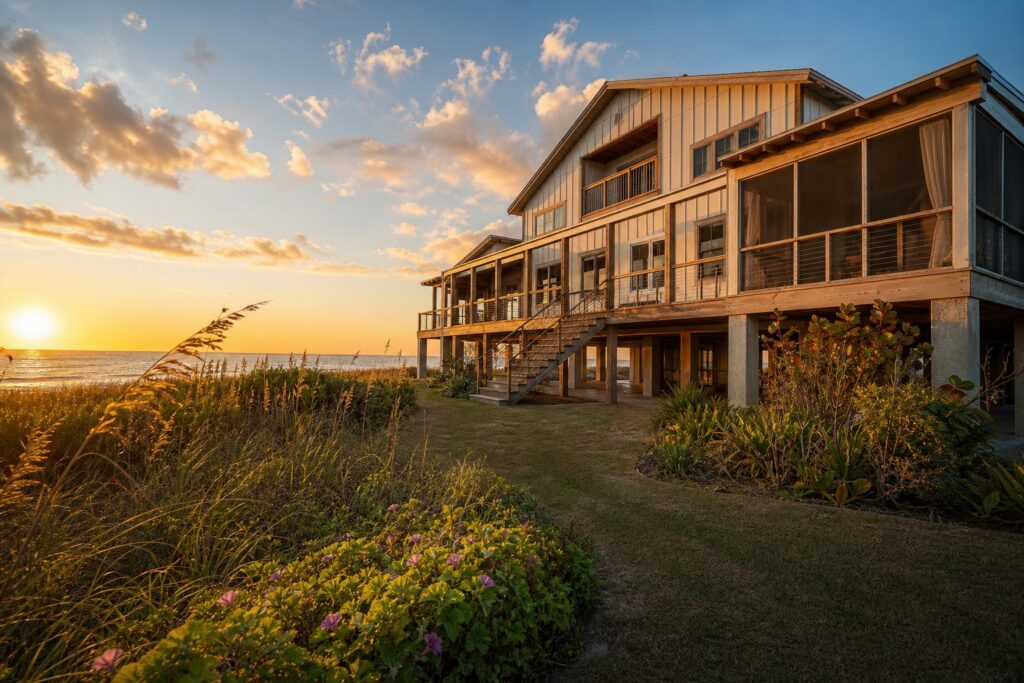
How do I coordinate selling my St George Island beach house in 2026 while simultaneously buying a home in my destination city without ending up homeless in between?
You coordinate by building a financial bridge between the two transactions, whether that means a bridge loan, a HELOC, a rent-back agreement, or strategic use of your SGI rental income to carry both properties until the sale closes.
Why This Matters for St George Island Homeowners Right Now
I get this question more than almost any other, and I understand why. Selling a beach house on a barrier island is not the same as selling a suburban home in a metro area. The buyer pool is different. The timeline is different. The emotional weight is different.
Here in 2026, St George Island homes are averaging about 121 days on market, and actual sales are coming in around 95% of list price. That means if you need to buy somewhere else first, you could be carrying two properties for four months or longer. With average property taxes on the island running about $8,100 a year and insurance premiums adding another $2,575 to $4,200 annually, that gap between selling and buying is not just stressful; it is expensive.
The good news? After a quieter couple of years, 2026 is bringing more movement and more opportunity to the market. Buyers are showing up again, and you have options I have helped dozens of homeowners navigate over my 13 years in this business.
Understanding the St George Island Market Before You List
Before you can coordinate anything, you need a clear-eyed picture of what your home is actually worth in today’s market and how long it will realistically take to sell.
The median sold price on St George Island in July 2026 was $1,200,000. The average listing price sits higher, around $1,502,000, but homes are selling for roughly 6% below list price. That gap matters when you are trying to calculate how much equity you will have to put toward your next home.
What I tell my clients is this: your sale price is not your listing price. If you are sitting in the West End near West Gorrie Drive with a gulf-front property, you are looking at a different buyer pool and price point than someone selling a bay-view home in the Plantation off Leisure Lane or Bay Drive. A turnkey, well-maintained property will move faster and closer to asking price. A home that needs work? Expect a longer timeline and deeper negotiations.
One couple I worked with last spring had a beautifully maintained East End property near St. George Island State Park. They wanted to move to Savannah to be closer to grandchildren. We listed strategically in early April, caught the first wave of spring buyers, and had an accepted offer in 47 days, well under the island average. That head start on timing made their entire relocation possible without a single night in a hotel.
So step one is always pricing honestly, not hopefully.
Five Strategies to Bridge the Gap Between Your St George Island Sale and Your Next Purchase
Strategy 1: Use a Bridge Loan or HELOC
If you have significant equity in your SGI home, and most owners do given that Franklin County home values have nearly doubled over the past decade, a bridge loan or home equity line of credit lets you pull funds for a down payment on your destination home before your island property sells.
This is especially powerful for St George Island sellers because the average home here carries substantial value. Even a conservative HELOC against a property worth $1.2 million could free up enough cash to make a competitive, non-contingent offer in your destination market.
The key is setting this up well before you list. I recommend starting the HELOC process at least 60 to 90 days before you plan to go on market. For more information on the costs and process involved in homebuying, consult the Consumer Finance Bureau’s guide to homebuying costs.
Strategy 2: Negotiate a Rent-Back or Extended Closing
Here is something unique about selling on St George Island: many of your buyers are purchasing a vacation home or investment property. They may not need to move in next Tuesday. This gives you leverage to negotiate a longer closing period or a post-sale rent-back arrangement where you remain in the home for 30 to 60 days after closing.
I recently helped a seller in the Plantation negotiate a 45-day rent-back because the buyer was an out-of-state investor who planned to renovate before renting the property. The seller used that window to close on a home in Asheville without ever being between addresses.
Strategy 3: Keep Your Rental Income Working for You
This is the advantage most SGI sellers do not fully appreciate. If your beach house has an active vacation rental history, and many island properties are generating $64,000 to $126,000 in gross rental income in 2026 alone, you can keep honoring bookings while the home is listed. That rental income offsets your carrying costs during the transition.
I coordinate showings around rental turnovers all the time. It requires more scheduling finesse, but it means you are not hemorrhaging money while you wait for the right buyer.
Strategy 4: Make a Contingent Offer in Your Destination City
A sale contingency means your purchase of the new home depends on your SGI property selling first. This approach is less competitive in hot metro markets, but in balanced or buyer-friendly destination cities, it is absolutely viable.
The strength of your contingent offer improves dramatically if your St George Island home is already under contract, even if it has not closed yet. A signed contract with a qualified buyer signals to the destination seller that your funds are real and the timeline is predictable.
Strategy 5: Plan for Temporary Housing
Sometimes the cleanest path forward is selling your island home, banking the proceeds, and renting short-term in your destination city while you house-hunt without pressure. A month-to-month furnished rental or an extended-stay option takes the desperation out of buying, and desperate buyers make expensive mistakes.
Having closed over 300 transactions on this coast, I have seen every version of this process. The sellers who end up happiest are almost always the ones who gave themselves a cushion of time rather than trying to thread the needle down to the exact day.
Timing Your St George Island Listing for Maximum Coordination
Timing is everything on a barrier island, and the calendar here works differently than it does on the mainland.
Spring through early summer is your strongest listing window on St George Island. Buyer interest peaks when the island is at its most beautiful, when the Gulf is warm and the sunsets are painting the sky behind the Blue Parrot on West Gorrie Drive. But listing during peak summer also means potentially sacrificing $10,000 to $20,000 per month in rental income from bookings you have already accepted.
What I advise is a case-by-case analysis. If your home typically generates strong rental revenue from May through August, we may list in late February to capture early-season buyers while your summer bookings are still intact. If your rental calendar is lighter, a May listing catches the wave of summer buyer traffic.
The worst time to list? Deep winter, when the island is quiet and the buyer pool thins to serious investors only.
The Financial Math You Need to Run Before Listing on St George Island
Before you commit to a timeline, sit down and map out the numbers. Here is what to calculate:
- Your likely net proceeds: Take your realistic sale price (remember, about 95% of list on SGI right now), subtract your remaining mortgage balance, closing costs, and agent commissions. That is your working capital for the next home.
- Your monthly carrying costs: Property taxes (roughly $675/month on the island average), insurance ($215 to $350/month depending on flood zone), mortgage payment if applicable, and maintenance.
- Your rental income offset: If you are earning rental revenue during the listing period, subtract that from your carrying costs. Some of my clients actually come out ahead during this phase.
- Your destination market budget: Current 30-year mortgage rates are hovering around 6.52%. Run the numbers on what your SGI equity translates to in your new market. A seller netting $800,000 from a St George Island sale has very different purchasing power in Nashville than in San Francisco.
Working With Agents in Two Markets at Once
Coordinating a sale on a 22-mile barrier island while simultaneously purchasing in a city hundreds of miles away requires agents who talk to each other. Your listing agent on St George Island needs to understand your purchase timeline, and your buyer’s agent in the destination city needs to understand the realities of an island market where homes average 121 days to go pending.
With 33 five-star reviews and a ranking in the top 6% of Berkshire Hathaway HomeServices agents nationwide, I have built a referral network specifically for relocating homeowners. When you work with me to sell your SGI home, I connect you with a vetted, experienced agent in your destination market who understands the coordination required.
Frequently Asked Questions
How long does it take to sell a home on St George Island in 2026?
On average, homes on St George Island are going pending in about 121 days. However, turnkey properties that are priced correctly from day one are moving faster. Homes that need work or are priced above market tend to sit longer. Your pricing strategy has the single biggest impact on your timeline, which directly affects your coordination plan with a destination purchase.
Can I keep renting my St George Island home while it is listed for sale?
Yes, and many sellers do exactly this. I schedule showings around rental turnovers and coordinate with property managers to ensure the home shows well. Some SGI properties are generating over $100,000 in gross rental income in 2026, so keeping bookings active while listed helps offset your carrying costs during the transition period.
What is a bridge loan and does it work for St George Island sellers?
A bridge loan is a short-term loan that uses your current home equity to fund a down payment on your next property before your existing home sells. Given the substantial equity most SGI homeowners hold, with the average listing price around $1.5 million, bridge loans are a particularly effective tool. You repay the bridge loan once your island home closes. The HUD homebuying guide provides additional resources on financing options.
Should I sell my St George Island beach house before buying my next home?
In most cases, selling first gives you the strongest negotiating position in your destination market because you are not dependent on a contingency. However, if your destination market is competitive and fast-moving, buying first with a bridge loan or HELOC may be necessary to avoid losing out. The right answer depends on your financial situation and both markets.
What are the carrying costs if I own two homes simultaneously?
On St George Island, expect roughly $675 per month in property taxes, $215 to $350 per month in insurance, plus your mortgage payment and routine maintenance. Add the carrying costs of your new home on top of that. For many homeowners, this dual-carry period runs $4,000 to $8,000 per month or more, which is why minimizing the overlap is critical.
Is fall or winter a bad time to list on St George Island?
Fall can still work, especially September and October when the island is pleasant and serious buyers are less distracted by vacation schedules. Deep winter, from December through February, typically brings the smallest buyer pool. If your relocation timeline forces a winter listing, price aggressively and target the investor buyer segment.
Can I negotiate a rent-back agreement with my St George Island buyer?
Absolutely. Because many SGI buyers are purchasing vacation homes or investment properties, they often do not need immediate occupancy. Rent-back agreements of 30 to 60 days are common on the island and give you a critical window to close on your destination home.
How do I handle capital gains taxes on selling my St George Island home?
If you have used the property as your primary residence for at least two of the past five years, you may qualify for the capital gains exclusion of up to $250,000 for single filers or $500,000 for married couples. If the property was strictly a vacation or rental home, different rules apply. Consult your tax advisor before listing.
What if my St George Island home does not sell in time?
This is why a backup plan matters. Options include converting to a short-term rental to generate income while relisting, adjusting your price based on market feedback, or pausing your destination purchase until you have a signed contract. In my experience, most pricing-related delays can be resolved within 30 days of a strategic price adjustment.
How do I choose the right listing agent for a relocation sale on St George Island?
Look for an agent who specializes in relocation, understands the seasonal dynamics of a barrier island market, and has a referral network in destination markets. My family has been on this island since 1968, and with over 300 closed transactions, I have the local knowledge and the national network to coordinate both sides of your move.
The Bottom Line
Selling your St George Island beach house while buying somewhere new does not have to leave you sleeping in your car. It requires honest pricing, smart timing, the right financial bridge, and an agent who has done this hundreds of times on this very island. Whether your home sits along West Gulf Beach Drive, inside the Plantation gates, or on the East End near the State Park, the coordination strategy starts with understanding your specific property, your equity, and your timeline. I would love to have that honest conversation with you. Call me, Melissa Chandler, at 850-653-7893 or visit my office at 140 W 1st Street on St George Island. Let’s build your plan so the next chapter starts smoothly.